
Geological Mapping, Petrographic Characteristics and Grain-Size Analysis of Sandstone in Inachi, Lower Benue Trough, Nigeria
DOI:
https://doi.org/10.70882/josrar.2026.v3i5.308Keywords:
Inachi, Otobi sandstone, Lower Benue Trough, Petrography, Grain-size analysis, Groundwater potentialAbstract
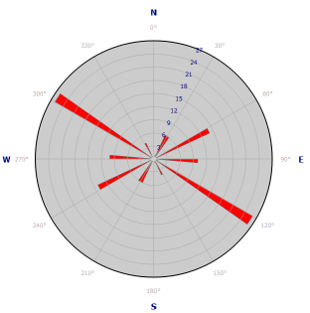
Geological mapping, petrographic examination and grain-size analysis were undertaken to characterise sedimentary rocks in Inachi, Lower Benue Trough, Nigeria, and assess their depositional and groundwater implications. Mapping covered approximately 20 km² within Otukpo Sheet 270SW, supported by thin-section examination and sieve analysis of three sandstone samples. Shale and sandstone were the principal lithologies. Fractures showed a dominant NW–SE orientation, while sandstone beds dipped 4–8° and ranged from 0.2 to 2.3 m in thickness. Reported petrographic estimates comprised 52–60% quartz, 30–35% feldspar and 5–18% accessory constituents; uncertainty in these estimates was not quantified. Grain-size statistics recalculated from previously recorded percentiles, rather than new measurements, yielded mean sizes of 2.567–2.800 φ and sorting values of 0.458–0.598 φ. The sandstone samples were fine-grained, with two classified as well sorted and one as moderately well sorted. Skewness ranged from 0.029 to 0.331 and kurtosis from 1.393 to 1.475, indicating nearly symmetrical to strongly fine-skewed, leptokurtic distributions. Contrasting fluvial and beach signatures from existing discrimination plots leave the depositional environment unresolved; a transitional setting remains a tentative interpretation. Local shallow groundwater abstraction indicates water occurrence, but seasonal well failure and the absence of direct petrophysical and hydraulic measurements prevent conclusions about aquifer productivity. The findings provide a preliminary geological baseline, with interpretations limited by the small sample set. Broader sampling, improved stratigraphic control and direct hydraulic testing are needed.
References
Benkhelil, J. (1989). The origin and evolution of the Cretaceous Benue Trough (Nigeria). Journal of African Earth Sciences (and the Middle East), 8(2–4), 251–282. https://doi.org/10.1016/S0899-5362(89)80028-4
Folk, R. L., & Ward, W. C. (1957). Brazos River bar: A study in the significance of grain size parameters. Journal of Sedimentary Petrology, 27(1), 3–26. https://doi.org/10.1306/74D70646-2B21-11D7-8648000102C1865D
Friedman, G. M. (1961). Distinction between dune, beach, and river sands from their textural characteristics. Journal of Sedimentary Petrology, 31(4), 514–529. https://doi.org/10.1306/74D70BCD-2B21-11D7-8648000102C1865D
Obaje, N. G. (2009). Geology and mineral resources of Nigeria. Springer. https://doi.org/10.1007/978-3-540-92685-6
Odigi, M. I., & Amajor, L. C. (2008). Origin of carbonate cements in Cretaceous sandstones from lower Benue Trough, Nigeria: Evidence from petrography and stable isotope composition. Scientia Africana, 7(2). https://doi.org/10.4314/sa.v7i2.46026
Tijani, M. N., & Nton, M. E. (2009). Hydraulic, textural and geochemical characteristics of the Ajali Formation, Anambra Basin, Nigeria: Implication for groundwater quality. Environmental Geology, 56, 935–951. https://doi.org/10.1007/s00254-008-1196-1
Wentworth, C. K. (1922). A scale of grade and class terms for clastic sediments. The Journal of Geology, 30(5), 377–392. https://doi.org/10.1086/622910
Downloads
Published
Issue
Section
License
Copyright (c) 2026 Godwin Ezra Ikwutah (Author)

This work is licensed under a Creative Commons Attribution-NonCommercial 4.0 International License.
- Attribution — You must give appropriate credit, provide a link to the license, and indicate if changes were made. You may do so in any reasonable manner, but not in any way that suggests the licensor endorses you or your use.
- NonCommercial — You may not use the material for commercial purposes.
- No additional restrictions — You may not apply legal terms or technological measures that legally restrict others from doing anything the license permits.