
Impact of Aspergillus spp. lipase to Influence Histological and Biochemical Deviations in Female Rats
DOI:
https://doi.org/10.70882/josrar.2026.v3i5.301Keywords:
Aspergillus Niger, Lipase, Rats, Glutathione (GSH), HistologicalAbstract
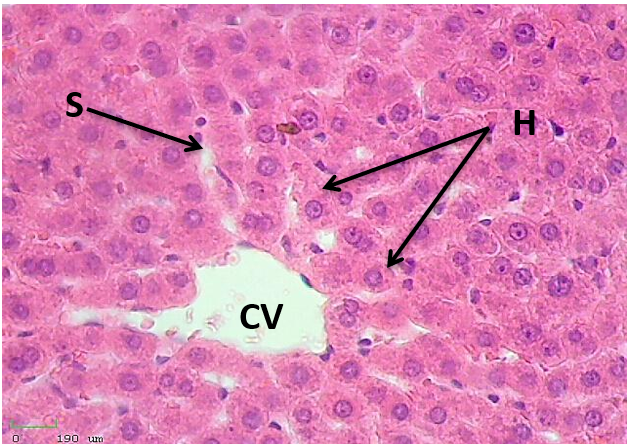
Fungal lipases, including those produced by Aspergillus niger, are widely used in industrial, pharmaceutical, and food applications due to their catalytic efficiency, yet their potential toxicological effects on biological systems remain poorly understood. Given increasing exposure to these enzymes, evaluating their biochemical and histopathological consequences is essential for assessing safety risks. This paper analyses the biochemical and histological impacts of lipase from Aspergillus niger in female albino rats under laboratory conditions. Twenty adult female rats were separated into control and treated groups. The treatment groups received intraperitoneal injections of lipase at two concentrations over a three-week period. Biochemical parameters were assessed by measuring interleukins (IL-1α, IL-2, IL-6, and IL-8) and oxidative stress indicators malondialdehyde (MDA) and glutathione (GSH). Liver tissues were examined histologically to identify structural changes. Findings revealed that interleukin levels in treated groups increased significantly, indicating activation of inflammatory processes. Elevated MDA reflected increased lipid peroxidation, while altered GSH levels indicated impaired antioxidant defense systems, together affirming oxidative stress caused by lipase exposure. Histological examination showed structural liver damage, including hepatocellular degeneration, central vein wall thickening, and inflammatory cell infiltration, with more severe changes in the higher-dose group, indicating a dose-dependent effect. In conclusion, female rats exposed to Aspergillus niger lipase experienced significant biochemical imbalances and liver tissue damage. This study identifies fungal lipases as inducers of oxidative stress and inflammation contributing to enzyme-induced toxicity, providing a basis for further investigation into their role in disease development and toxicological mechanisms.
References
Ainsworth, G. C. (1976). Introduction to the History of Mycology. Cambridge University Press.
Alabdalall, A. H., ALanazi, N. A., Aldakeel, S. A., AbdulAzeez, S., & Borgio, J. F. (2020). Molecular, physiological, and biochemical characterization of extracellular lipase production by Aspergillus niger using submerged fermentation. PeerJ, 8, e9425.
Balajee, S., Houbraken, J., Verweij, P., Hong, S., Yaghuchi, T., Varga, J., & Samson, R. (2007). Aspergillus species identification in the clinical setting. Studies in Mycology, 59(1), 39–46.
Bearth, A., Roth, N., Wilks, M. F., & Siegrist, M. (2024). Intuitive toxicology in the 21st century—bridging the perspectives of the public and risk assessors in Europe. Risk Analysis, 44(10), 2348–2359.
Bennett, J. W. (2009). Aspergillus: A primer for the novice. Medical Mycology, 47(sup1), S5–S12.
BM, N. Y., & Mahmood, F. S. (2013). Investigating the influence of emitted cadmium from crude oil combustion on glutathione level in workers at Al-Qudis power plant. Baghdad Journal of Science, 55(4), 1792–1801.
Bourogaa, E., Jarraya, R. M., Damak, M., & Elfeki, A. (2015). Hepatoprotective activity of Peganum harmala against ethanol-induced liver damages in rats. Archives of Physiology and Biochemistry, 121(2), 62–67.
Cairns, T. C., Nai, C., & Meyer, V. (2018). How a fungus shapes biotechnology: 100 years of Aspergillus niger research. Fungal Biology and Biotechnology, 51(31), 21–23.
Devendran, G., & Balasubramanian, U. (2011). Biochemical and histopathological analysis of aflatoxin induced toxicity in liver and kidney of rat. Asian Journal of Plant Science & Research.
Djordjevic, J. T. (2010). Role of phospholipases in fungal fitness, pathogenicity, and drug development–lessons from Cryptococcus neoformans. Frontiers in Microbiology, 1, 125.
Durr-e-Nayab, D.-e.-N., Haider, M., Qasim Ali, Q. A., Tehreema Iftikhar, T. I., Noman Habib, N. H., Mubashir Niaz, M. N., . . . Sumreena Shahid, S. S. (2018). In silico phylogenetic analysis of fungal lipase genes and harnessing the inherent potential of Aspergillus niger IBP2013 for extracellular triglycerol acyl-hydrolase production under solid state fermentation.
El-Korany, S. M., Helmy, O. M., El-Halawany, A. M., Ragab, Y. E.-M., & Zedan, H. H. (2020). Kojic acid repurposing as a pancreatic lipase inhibitor and the optimization of its production from a local Aspergillus oryzae soil isolate. BMC Biotechnology, 20(1), 52.
Gabay, C. (2006). Interleukin-6 and chronic inflammation. Arthritis Research & Therapy, 8(Suppl 2), S3.
Hamzah, M. O., & Turki, K. M. (2011). Serum levels of interleukin-1 alpha and interleukin-6 in acute coronary syndrome patients. Iraqi Journal of Medical Sciences, 9(3).
Huang, W., Lan, D., Popowicz, G. M., Zak, K. M., Zhao, Z., Yuan, H., . . . Wang, Y. (2019). Structure and characterization of Aspergillus fumigatus lipase B with a unique, oversized regulatory subdomain. The FEBS Journal, 286(12), 2366–2380.
Jasim, S. T., & Saleh, A. H. (2020). Effects of Aspergillus spp. phospholipase to induce histological and biochemical changes in male rats. International Journal of Psychosocial Rehabilitation, 24(05).
Kulas, J., Mirkov, I., Tucovic, D., Zolotarevski, L., Glamoclija, J., Veljovic, K., & Kataranovski, M. (2019). Pulmonary Aspergillus fumigatus infection in rats affects gastrointestinal homeostasis. Immunobiology, 224(1), 116–123.
Kushner, I. (1993). Regulation of the acute phase response by cytokines. Perspectives in Biology and Medicine, 36(4), 611–622.
Liu, J., Sun, L., Zhang, N., Zhang, J., Guo, J., Li, C., . . . Qi, D. (2016). Effects of nutrients in substrates of different grains on aflatoxin B1 production by Aspergillus flavus. BioMed Research International, 2016(1), 7232858.
Mahmood, N. A. (2010). Glutathion-S-transferase enzyme and malondialdehyde (MDA) in colorectal cancer and in healthy control. Iraqi Journal of Cancer and Medical Genetics, 3(1), 21–26.
Methawasin, M., Strom, J., Marino, V. A., Gohlke, J., Muldoon, J., Herrick, S. R., & Granzier, H. (2025). An ovary-intact postmenopausal HFpEF mouse model; menopause is more than just estrogen deficiency. American Journal of Physiology-Heart and Circulatory Physiology, 328(4), H719–H733.
Meyer, V., Basenko, E. Y., Benz, J. P., Braus, G. H., Caddick, M. X., Csukai, M., & Gunde-Cimerman, N. (2020). Growing a circular economy with fungal biotechnology: A white paper. Fungal Biology and Biotechnology, 7(1), 5.
Millman, I., London, W. T., Sutnick, A. I., & Blumberg, B. S. (1970). Australia antigen–antibody complexes. Nature, 226(5240), 83–84.
Ohnishi, K., Yoshida, Y., & Sekiguchi, J. (1994). Lipase production of Aspergillus oryzae. Journal of Fermentation and Bioengineering, 77(5), 490–495.
Pagano, L., Caira, M., Picardi, M., Candoni, A., Melillo, L., Fianchi, L., & Nosari, A. (2007). Invasive aspergillosis in patients with acute leukemia: Update on morbidity and mortality—SEIFEM-C Report. Clinical Infectious Diseases, 44(11), 1524–1525.
Perrone, G., Susca, A., Cozzi, G., Ehrlich, K., Varga, J., Frisvad, J., . . . Samson, R. (2007). Biodiversity of Aspergillus species in some important agricultural products. Studies in Mycology, 59(1), 53–66.
Wigmore, S. J., Fearon, K. C., Maingay, J. P., Lai, P. B., & Ross, J. A. (1997). Interleukin-8 can mediate acute-phase protein production by isolated human hepatocytes. American Journal of Physiology-Endocrinology and Metabolism, 273(4), E720–E726.
Downloads
Published
Issue
Section
Categories
License
Copyright (c) 2026 Saif Talib Jasim (Author)

This work is licensed under a Creative Commons Attribution-NonCommercial 4.0 International License.
- Attribution — You must give appropriate credit, provide a link to the license, and indicate if changes were made. You may do so in any reasonable manner, but not in any way that suggests the licensor endorses you or your use.
- NonCommercial — You may not use the material for commercial purposes.
- No additional restrictions — You may not apply legal terms or technological measures that legally restrict others from doing anything the license permits.