
Neuroanatomical, Neurochemical and DNA Fragmentation Effects of Maternal Sleep Deprivation on the Hippocampal CA1 Region of F1 Female Wistar Rat Offspring
DOI:
https://doi.org/10.70882/josrar.2026.v3i3.295Keywords:
Sleep deprivation, Hippocampus – CA1, Stereology, DNA fragmentation, High-performance liquid chromatographyAbstract
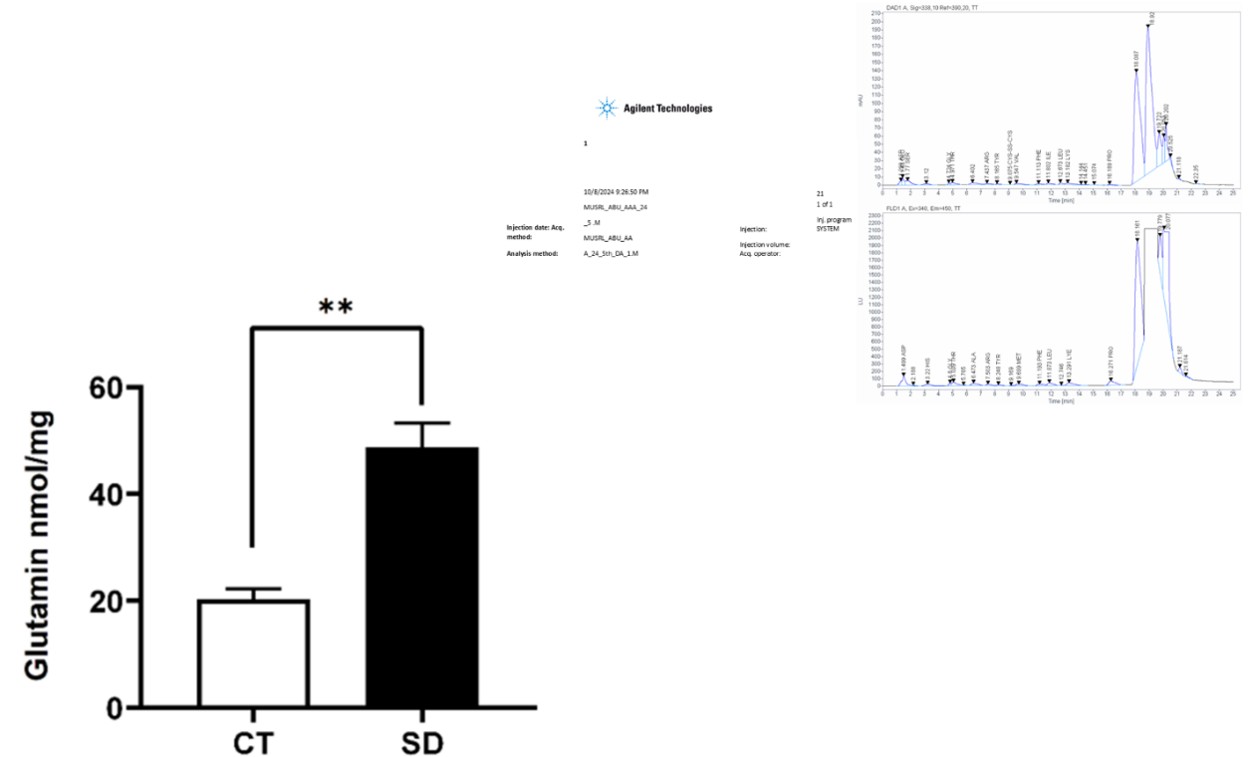
Maternal sleep deprivation (MSD) during pregnancy may adversely affect offspring neurodevelopment, particularly hippocampal structure and function. This study investigated the effects of gestational sleep deprivation on the hippocampal CA1 region of female F1 Wistar rat offspring, focusing on pyramidal cell number, glutamate concentration, and DNA fragmentation. Adult male and female Wistar rats were acclimatized for two weeks before mating. Female estrous cycles were monitored, and successful mating was confirmed by spermatozoa and vaginal plug detection, designated as gestational day (GD) 0. Pregnant dams were randomly assigned to control or MSD groups. Dams in the MSD group underwent 20 hours of daily sleep deprivation from GD5 to GD14 using the modified multiple-platform method, targeting a critical period of fetal brain development. Female F1 offspring were euthanized on postnatal day 43 for tissue collection and analysis. Glutamate concentration in the CA1 region was quantified using high-performance liquid chromatography (HPLC), while thionine staining combined with unbiased stereological analysis was used to estimate pyramidal cell number. DNA fragmentation was assessed using Feulgen staining and optical density measurements. Compared with controls, MSD offspring exhibited significant reductions in CA1 glutamate concentration and pyramidal cell number, accompanied by significantly increased DNA fragmentation optical density. These findings demonstrate that gestational sleep deprivation induces persistent neurochemical, structural, and epigenetic alterations in the hippocampal CA1 region of female offspring, indicating that prenatal sleep loss may disrupt hippocampal development and impair long-term hippocampal function.
References
Anderson, E. B., Grossrubatscher, I., & Frank, L. (2014, January). Dynamic hippocampal circuits support learning-and memory-guided behaviors. In Cold Spring Harbor symposia on quantitative biology (Vol. 79, pp. 51-58). Cold Spring Harbor Laboratory Press.
Bak, L. K., Schousboe, A., & Waagepetersen, H. S. (2006). The glutamate/GABA–glutamine cycle:
Aspects of transport, neurotransmitter homeostasis and ammonia transfer. Journal of Neurochemistry, 98(3), 641–653.
Biggiogera, M., Cavallo, M., & Casali, C. (2024). A brief history of the Feulgen reaction. Histochemistry and Cell Biology, 162(1), 3-12.
Bishir, M., Bhat, A., Essa, M. M., Ekpo, O., Ihunwo, A. O., Veeraraghavan, V. P., ... & Ojcius, D. M. (2020). Sleep deprivation and neurological disorders. BioMed research international, 2020(1), 5764017.
Calegare, B. F. A., Fernandes, L., Tufik, S., & D’Almeida, V. (2010). Biochemical, biometrical and behavioral changes in male offspring of sleep-deprived mice. Psychoneuroendocrinology, 35(5), 775-784.
Câmara, J. S., Martins, C., Pereira, J. A., Perestrelo, R., & Rocha, S. M. (2022). Chromatographic-based platforms as new avenues for scientific progress and sustainability. Molecules, 27(16), 5267.
Carla, F., Susana, C., Ricardo, F., Mariana, L. P., Joana, G., Antoni, C., ... & Ana, F. (2024). Cannabinoid modulation of monoamine levels in mouse brain: unveiling neurochemical dynamics through an innovative high-performance liquid chromatography-fluorescence detection bioanalysis. Journal of Analysis and Testing, 8(3), 300-314.
Clark, R. E., Zola, S. M., & Squire, L. R. (2000). Impaired recognition memory in rats after damage to the hippocampus. The Journal of Neuroscience, 20(23), 8853-8860.
Cora, M. C., Kooistra, L., & Travlos, G. (2015). Vaginal cytology of the laboratory rat and mouse: review and criteria for the staging of the estrous cycle using stained vaginal smears. Toxicologic pathology, 43(6), 776-793.
de Boer, S. F., & Koolhaas, J. M. (2024). The laboratory rat. The UFAW Handbook on the Care and Management of Laboratory and Other Research Animals, 379-399.
Delgado, A., & Louis, J. M. (2022). Sleep deficiency in pregnancy. Clinics in chest medicine, 43(2), 261-272.
Dong, M. W. (2019). HPLC and UHPLC for Practicing Scientists. John Wiley & Sons.
Elmore S. (2007). Apoptosis: a review of programmed cell death. Toxicologic pathology, 35(4), 495–516.
Everson, C. A., Henchen, C. J., Szabo, A., & Hogg, N. (2014). Cell injury and repair resulting from sleep loss and sleep recovery in laboratory rats. Sleep, 37(12), 1929–1940.
Goldman, J. M., Murr, A. S., & Cooper, R. L. (2007). The rodent estrous cycle: characterization of vaginal cytology and its utility in toxicological studies. Birth Defects Research Part B: Developmental and Reproductive Toxicology, 80(2), 84-97.
Gulyani, S., Majumdar, S., & Mallick, B. N. (2000). Rapid eye movement sleep and significance of its deprivation studies: A review. Sleep and Hypnosis, 2(2), 49-68.
Gundersen, H. J. G., Bendtsen, T. F., Korbo, L., Marcussen, N., Møller, A., Nielsen, K., & West, M. J. (1988). Some new, simple and efficient stereological methods and their use in pathological research and diagnosis. Apmis, 96(1‐6), 379-394.
Hamid, H. Y., & Zakaria, M. Z. A. B. (2013). Reproductive characteristics of the female laboratory rat. African journal of biotechnology, 12(19), 2510-2514.
Havekes, R., & Abel, T. (2017). The tired hippocampus: the molecular impact of sleep deprivation on hippocampal function. Current opinion in neurobiology, 44, 13-19.
Hertz, L., & Rothman, D. L. (2016). Glucose, lactate, glutamine and glutamate as substrates for
brain energy metabolism. Journal of Cerebral Blood Flow & Metabolism, 36(1), 16–23.
Henderson, D. E., & O’Conner, D. J. (2021). Low-temperature high-performance liquid chromatography for separation of thermally labile species. Advanced in Chromatography; Giddings, JC; Grushka, E.; Cazes, J, 65-95.
Hodor, A., Palchykova, S., Baracchi, F., Noain, D., & Bassetti, C. L. (2014). Baclofen facilitates sleep, neuroplasticity, and recovery after stroke in rats. Annals of clinical and translational neurology, 1(10), 765-777.
Houldsworth, A. (2024). Role of oxidative stress in neurodegenerative disorders: a review of reactive oxygen species and prevention by antioxidants. Brain Communications, 6(1), fcad356.
Hyndych, A., El-Abassi, R., & Mader Jr, E. C. (2025). The Role of Sleep and the Effects of Sleep Loss on Cognitive, Affective, and Behavioral Processes. Cureus, 17(5), e84232-e84232.
Ibiyeye, K. M., Ibraheem, N. T., Aladesuyi, L. A., Ayeni, P. R., & Adeyemi, B. A. (2026). Cytology and Histology of the Vaginal Epithelium at Different Stages of the Wistar Rat’s Oestrous Cycle. Fountain Journal of Basic Medical and Health Sciences, 2(1), 60-66.
Kaur, N., Sharma, V., Saini, M., Arora, P., Sindhu, R. K., & Sharma, D. (2026). 9 Chromatography: basics and their applications. Handbook of Natural Bioactive Compounds: Extraction, Isolation and Identification, 233.
Kim, J. J., & Diamond, D. M. (2002). The stressed hippocampus, synaptic plasticity and lost memories. Nature Reviews Neuroscience, 3(6), 453-462.
Kumar, G. T. J., Andrews, B. S. A., & Abbaraju, V. D. N. K. (2025). Method development in pharmaceutical chemistry analysis by chromatography: A comprehensive review. Analytical Methods in Environmental Chemistry Journal, 8(3), 147-181.
Kuru, B. B., & Kuru, M. (2023). Reproductive behavior in female rats: Reproductive behavior in female rats. Rats, 1(1), 21-26.
Liu, Q., Yan, J., Wang, H., Wang, T., Zhang, K., Li, A., ... & Li, L. (2025). Maternal sleep deprivation during pregnancy induced offspring germ cells loss through ferroptosis. Cell Death Discovery, 11(1), 544.
Machado, S., Stawiński, W., Slonina, P., Pinto, A. R., Grosso, J. P., Nouws, H. P. A., ... & Delerue-Matos, C. (2013). Application of green zero-valent iron nanoparticles to the remediation of soils contaminated with ibuprofen. Science of the Total Environment, 461, 323-329.
Marcondes, F. K., Bianchi, F. J., & Tanno, A. P. (2002). Determination of the estrous cycle phases of rats: some helpful considerations. Brazilian journal of biology, 62(4a), 609-614.
Maccari, S., Darnaudéry, M., M. P. S., et al. (2003). Prenatal stress and long-term consequences:
Implications for neuroendocrine and behavioral development. Neuroscience & Biobehavioral Reviews, 27, 41–50.
Magariños, A. M., & McEwen, B. S. (2000). Stress-induced atrophy of apical dendrites of
hippocampal CA3c neurons: Involvement of glucocorticoid secretion and excitatory amino acid receptors. Neuroscience, 69, 89–98.
McCarthy, M. M. (2017). Sex and the Developing Brain Second Edition. In Colloquium Series on The Developing Brain (Vol. 6, No. 1). Morgan & Claypool Publishers.
McEwen, B. S. (2000). The neurobiology of stress: From serendipity to clinical relevance. Brain
Research, 886, 172–189.
McEwen, B. S. (2007). Physiology and neurobiology of stress and adaptation: Central role of the
brain. Physiological Reviews, 87(3), 873–904.
McEwen, B. S., & Milner, T. A. (2017). Hippocampal formation: Shedding light on the influence
of sex and stress on the brain. Brain Research Reviews, 135, 103–116.
Mello, M. L. S., & de Campos Vidal, B. (2017). The Feulgen reaction: A brief review and new perspectives. Acta histochemica, 119(6), 603-609.
Meyer, V. R. (2010). Practical high-performance liquid chromatography. John Wiley & Sons.
Mindell, J. A., & Jacobson, B. J. (2000). Sleep disturbances during pregnancy. Journal of Obstetric, Gynecologic, & Neonatal Nursing, 29(6), 590-597.
Mirescu, C., Peters, J. D., & Gould, E. (2004). Early life experience alters response of adult neurogenesis to stress. Nature neuroscience, 7(8), 841-846.
Mueller, B. R., & Bale, T. L. (2008). Sex-specific programming of offspring emotionality after stress early in pregnancy. The Journal of Neuroscience, 28(36), 9055-9065.
Paxinos, G. (Ed.). (2014). The rat nervous system. Academic press.
Satyapal, H., Wankhede, N., Yadav, A., Rahangdale, S., Aglawe, M., Taksande, B., ... & Kale, M. (2025). Transgenerational effects of sleep deprivation: behavioral and epigenetic implications for maternal and offspring health. Physiology & Behavior, 115199.
Seckl, J. R., & Holmes, M. C. (2007). Mechanisms of disease: Glucocorticoids, their placental
metabolism and fetal programming of adult pathophysiology. Nature Clinical Practice Endocrinology & Metabolism, 3, 479–488.
Small, S. A., Schobel, S. A., Buxton, R. B., Witter, M. P., & Barnes, C. A. (2011). A pathophysiological framework of hippocampal dysfunction in ageing and disease. Nature Reviews Neuroscience, 12(10), 585-601.
Snyder, L. R. (2012). Efficient HPLC method: development and personal reflections. LC GC Europe, 25, 437-444.
Sontakke, S., Wankhede, N., Yadav, A., Taksande, B., Aglawe, M., Rahangdale, S., ... & Kale, M. (2026). Maternal sleep deprivation and developmental programming of brain aging trajectories in offspring. Biogerontology, 27(4), 113.
Soti, M., Ranjbar, H., Kohlmeier, K. A., & Shabani, M. (2022). Sex differences in the vulnerability of the hippocampus to prenatal stress. Developmental Psychobiology, 64(7), e22305.
Soyab, T. (2020). Special stains used in histopathological techniques: A brief view. Indian Journal of Forensic Medicine & Toxicology.
Sterio, D. C. (1984). The unbiased estimation of number and sizes of arbitrary particles using the disector. Journal of microscopy, 134(2), 127-136.
Tononi, G., & Cirelli, C. (2014). Sleep and the price of plasticity: From synaptic and cellular
homeostasis to memory consolidation and integration. Neuron, 81(1), 12–34.
Van den Bergh, B. R. H., Mulder, E. J. H., Mennes, M., & Glover, V. (2005). Antenatal maternal
anxiety and stress and the neurobehavioural development of the fetus and child: Links and possible mechanisms. Neuroscience & Biobehavioral Reviews, 29(2), 237–258.
Walker, M. P. (2009). The role of sleep in cognition and emotion. Annals of the new York Academy of Sciences, 1156(1), 168-197.
Yugesh, K., Kumar, S. K. S., & Kalaivani, P. (2023). Diagnostic Tests for Confirmation of Mating in Adult Female Wistar Rats: An Experimental Study. Journal of Clinical & Diagnostic Research, 17(10).
Downloads
Published
Issue
Section
Categories
License
Copyright (c) 2026 Y. A. Suleiman, Jibrin Danladi, H. Sule, T. I. Daniel, B. B. Dzekashu, A. Z. Suleiman, C. E. Emmanuel, M. A. Abubakar, M. Mustapha, A. A. Sadeeq, R. A. Oyewo, I. A. Aliyu, E. E. Josiah, Y. I. Sulaiman, N. Umar, A. Babankanwa, A. A. Lawal (Author)

This work is licensed under a Creative Commons Attribution-NonCommercial 4.0 International License.
- Attribution — You must give appropriate credit, provide a link to the license, and indicate if changes were made. You may do so in any reasonable manner, but not in any way that suggests the licensor endorses you or your use.
- NonCommercial — You may not use the material for commercial purposes.
- No additional restrictions — You may not apply legal terms or technological measures that legally restrict others from doing anything the license permits.