
Microscopy - Based Surveillance of Ectoparasites in Farmed African Catfish from Selected Farms in Lokoja, Nigeria
DOI:
https://doi.org/10.70882/josrar.2026.v3i5.267Keywords:
African Catfish, Clarias gariepinus, Ectoparasites, Fish Farm, Nigeria, Skin-Scrape MicroscopyAbstract
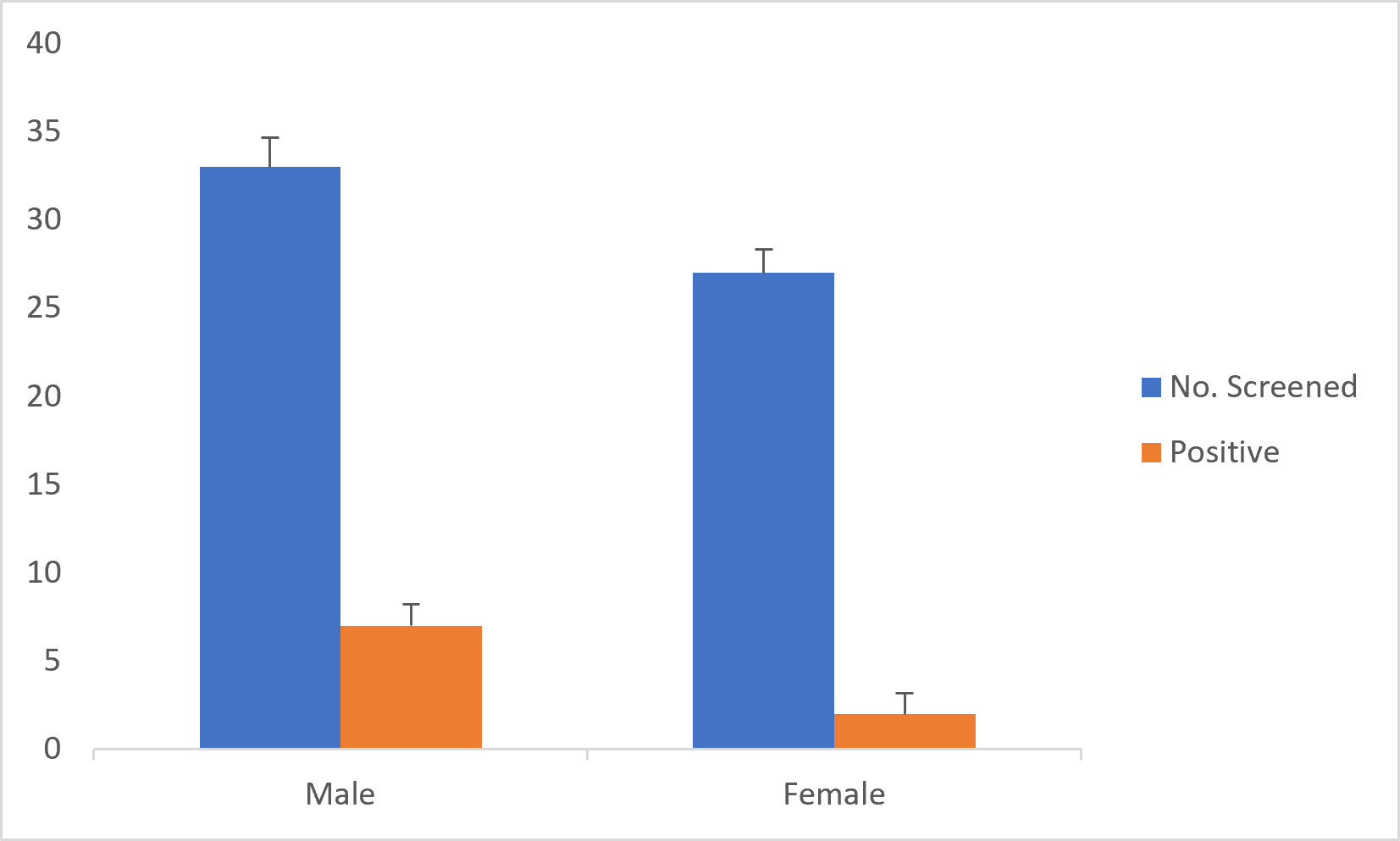
Parasitic disease constrains aquaculture productivity, yet farm-level surveillance of African catfish in north-central Nigeria remains limited. This study estimated the occurrence of ectoparasitic organisms on the skin of cultured Clarias gariepinus from three farms in Lokoja and examined exploratory host correlates. In this cross-sectional pilot survey, 60 live fish (20 per farm) were selected and transported to Federal University Lokoja. Sex, standard length, total length, and body mass were recorded. Unidirectional skin scrapes were examined as saline wet mounts by light microscopy at 100× and 400× total magnification. Prevalence was calculated using standard ecological definition and binomial 95% confidence intervals were computed with the Wilson method. Nine fish samples were positive with an overall prevalence of 15.0% (95% CI 8.1-26.1%). A total of nine organismal observations were made, comprising a ciliate; I. multifiliis (5.0%; 95% CI 1.7-13.7%) which was detected in three fish, and the copepod; Ergasilus (10.0%; 95% CI 4.7-20.1%) which was detected in six fish samples. Farm-specific prevalence was 20.0% (4/20; 95% CI 8.1- 41.6%) at each of two farms and 5.0% (1/20; 95% CI 0.9-23.6%) at the third. Seven of 33 males (21.2%) and two of 27 females (7.4%) were positive, the difference was however, not statistically significant (Fisher’s exact p≈0.17). Mean condition factor ranged from 0.83 to 0.94 across farms. It could be concluded there is a low burden ectoparasitic prevalence (15.0%) in cultured African catfish in Lokoja municipality. The findings inform the recommendation of routine farm surveillance, including regular monitoring of water quality and DNA-based confirmation tests in future studies.
References
Ageng’o, F. O., Waruiru, R. M., Wanja, D. W., Nyaga, P. N., Hamisi, M. M., Khasake, C. N., Wainaina, J. M., Munde, B. M., Mbuthia, P. G., Kamuti, N. M., Ali, S. E., Tavornpanich, S., Keya, E. A., & Chadag, M. V. (2024). Relationship between Water Quality Parameters and Parasite Infestation in Farmed Oreochromis Niloticus in Selected Rift Valley Counties, Kenya. Aquaculture Research, 2024, 6139798. https://doi.org/10.1155/2024/6139798
Barson, M., Mabika, N., Cooper, R. G., & Nhiwatiwa, T. (2014). Histopathology and Helminth Parasites of African Catfish Clarias gariepinus (Burchell, 1822) in Relation to Heavy Metal Pollution in a Subtropical River System. Journal of Applied Ichthyology, 30(5), pp 923–929. https://doi.org/10.1111/jai.12464
Bush, A. O., Lafferty, K. D., Lotz, J. M., & Shostak, A. W. (1997). Parasitology Meets Ecology on its own Terms: The Journal of Parasitology, 83(4), pp 575–583. https://doi.org/10.2307/3284227
De Benedetto, G., Capparucci, F., Natale, S., Savoca, S., Riolo, K., Gervasi, C., Albano, M., Giannetto, A., Gaglio, G., & Iaria, C. (2023). Morphological and Molecular Identification of Mullet Helminth Parasite Fauna from Ganzirri Lagoon (Sicily, Southern Italy). Animals, 13(5), p 847. https://doi.org/10.3390/ani13050847
Lieke, T., Meinelt, T., Hoseinifar, S. H., Pan, B., Straus, D. L., & Steinberg, C. E. W. (2020). Sustainable Aquaculture Requires Environmental-Friendly Treatment Strategies for Fish Diseases. Reviews in Aquaculture, 12(2), pp 943–965. https://doi.org/10.1111/raq.12365
Lindholm-Lehto, P. (2023). Water Quality Monitoring in Recirculating Aquaculture Systems. Aquaculture, Fish and Fisheries, 3(2), pp 113–131. https://doi.org/10.1002/aff2.102
Onoja-Abutu, A. E., Okpanachi, M. A., Alkazmi, L., Yaro, C. A., & Batiha, G. E.-S. (2021). Branchial Chamber and Gastrointestinal Tracts Parasites of Fish Species in Benue and Niger Rivers, North Central, Nigeria. International Journal of Zoology, 2021, 6625332. https://doi.org/10.1155/2021/6625332
Prastowo, J., Priyowidodo, D., Nurcahyo, W., & Sahara, A. (2023). Molecular and Morphological Identification of Lernaea spp. in Fish in Yogyakarta, Indonesia. Veterinary World, 16(5), pp 1044–1050. https://doi.org/10.14202/vetworld.2023.1044-1050
Shinn, A. P., Avenant-Oldewage, A., Bondad-Reantaso, M. G., Cruz-Laufer, A. J., García-Vásquez, A., Hernández-Orts, J. S., Kuchta, R., Longshaw, M., Metselaar, M., Pariselle, A., Pérez-Ponce de León, G., Pradhan, P. K., Rubio-Godoy, M., Sood, N., Vanhove, M. P. M., & Deveney, M. R. (2023). A Global Review of Problematic and Pathogenic Parasites of Farmed Tilapia. Reviews in Aquaculture, 15(S1), pp 92–153. https://doi.org/10.1111/raq.12742
Shvydka, S., Sarabeev, V., Estruch, V. D., & Cadarso-Suárez, C. (2018). Optimum Sample Size to Estimate Mean Parasite Abundance in Fish Parasite Surveys. Helminthologia, 55(1), pp 52–59. https://doi.org/10.1515/helm-2017-0059
Afolabi, O. J., Olususi, F. C., & Odeyemi, O. O. (2020). Comparative Study of African Catfish Parasites from Cultured and Natural Habitats. Bulletin of the National Research Centre, 44, Article 163. https://doi.org/10.1186/s42269-020-00419-4
Piasecki, W., Goodwin, A. E., Eiras, J. C., & Nowak, B. F. (2004). Importance of Copepoda in Freshwater Aquaculture. Zoological Studies, 43(2), pp 193–205.
Richter, H. C., Lückstädt, C., Focken, U. L., & Becker, K. (2000). An Improved Procedure to Assess Fish Condition on the Basis of Length–Weight Relationships. Archive of Fishery and Marine Research, 48(3), pp 255–264.
Tachia, M. U., Omeji, S., & Odeh, L. (2012). A Survey of Ectoparasites of Clarias gariepinus Caught from the University of Agriculture Research Fish Farm, Makurdi. Journal of Research in Forestry, Wildlife and Environment, 4(2), pp 30–37.
Yusuf, B. S., Suleman, K. M., Habiba, Z., & Ibrahim, H. K. (2023). Comparative Study of the Parasitic Helminth Burden of Clarias gariepinus and Tilapia zilli In Fresh Water Reservoir (Zobe Dam) Dutsin-Ma, Katsina, Nigeria. UMYU Scientifica, 2(2), 63-73.
Downloads
Published
Issue
Section
Categories
License
Copyright (c) 2026 O. S. Ejeh, J. C. Atawodi, G. O. Abovegodwin, O. J. Eniolorunda (Author)

This work is licensed under a Creative Commons Attribution-NonCommercial 4.0 International License.
- Attribution — You must give appropriate credit, provide a link to the license, and indicate if changes were made. You may do so in any reasonable manner, but not in any way that suggests the licensor endorses you or your use.
- NonCommercial — You may not use the material for commercial purposes.
- No additional restrictions — You may not apply legal terms or technological measures that legally restrict others from doing anything the license permits.