
Development and Feasibility Demonstration of a Smartphone-Based Virtual Reality Prototype for Student Wellness in a Resource-Constrained University Environment
DOI:
https://doi.org/10.70882/josrar.2026.v3i4.247Keywords:
Immersive Technology, Low-Cost Computing, Smartphone-Based VR, Student Wellness, Virtual RealityAbstract
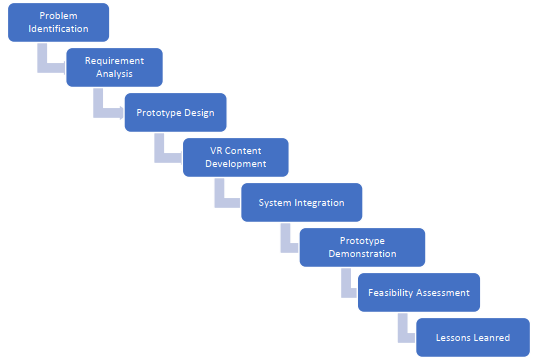
The increasing prevalence of stress among university students has become an important concern due to its potential impact on academic performance, emotional well-being, and overall quality of life. Research has explored tools like virtual reality (VR) for managing stress and improving well-being. While VR has shown promise as a supportive technology for wellness applications, many existing solutions rely on expensive hardware and sophisticated software that are often inaccessible in developing countries. This study demonstrates the development and feasibility of a low-cost smartphone-based virtual reality prototype designed to provide immersive relaxation experiences for university students in a resource-constrained environment. A design-oriented research approach was adopted to develop a prototype using commercially available smartphones, inexpensive VR headsets, and freely available 360-degree panoramic videos. The implementation process involved VR content preparation, smartphone optimization, system deployment, and a small-scale demonstration involving undergraduate students within a controlled university environment. The demonstration showed that the prototype could be successfully deployed using affordable hardware with minimal technical infrastructure. Participants generally found the immersive experience engaging and relaxing, although practical challenges including smartphone overheating, internet dependency for online content, device compatibility, and initial user orientation were observed. These findings indicate that smartphone-based VR systems can be implemented at relatively low cost within Nigerian universities and may serve as a practical foundation for future research involving structured usability assessments and controlled evaluations of student wellness interventions. The findings may assist educators, researchers, counselors, and institutional administrators interested in exploring affordable immersive technologies for student support services.
References
Akinola, Y. M., Agbonifo, O. C., & Sarumi, O. A. (2020). Virtual Reality as a tool for learning: The past, present and the prospect. Journal of Applied Learning and Teaching, 3(2), 51–58. https://doi.org/10.37074/jalt.2020.3.2.10
American College Health Association. (2023). American College Health Association National College Health Assessment III. www.acha.org/NCHA.
Annerstedt, M., Jönsson, P., Wallergård, M., Johansson, G., Karlson, B., Grahn, P., Hansen, Å. M., & Währborg, P. (2013). Inducing physiological stress recovery with sounds of nature in a virtual reality forest — Results from a pilot study. Physiology & Behavior, 118, 240–250. https://doi.org/10.1016/j.physbeh.2013.05.023
Asemota, R., Kingsley, E., Ejike, G., & Author, C. (2025). Counselling Centers in Universities in Nigeria: Problems and Possible Solutions. UKR Journal of Arts, Humanities and Social Sciences (UKRJAHSS), 1(7), 73–78. https://doi.org/10.5281/zenodo.17093302
Azarby, S., & Rice, A. (2022). User Performance in Virtual Reality Environments: The Capability of Immersive Virtual Reality Systems in Enhancing User Spatial Awareness and Producing Consistent Design Results. Sustainability, 14(21), 14129. https://doi.org/10.3390/su142114129
Browning, M. H. E. M., Mimnaugh, K. J., van Riper, C. J., Laurent, H. K., & LaValle, S. M. (2020). Can Simulated Nature Support Mental Health? Comparing Short, Single-Doses of 360-Degree Nature Videos in Virtual Reality With the Outdoors. Frontiers in Psychology, 10. https://doi.org/10.3389/fpsyg.2019.02667
Chen, L., Yan, R., & Yu, J. (2025). Virtual nature, real relief: how exposure to virtual natural environments reduces anxiety, stress, and depression in healthy adults. Npj Digital Medicine, 8(1), 679. https://doi.org/10.1038/s41746-025-02057-4
Freeman, D., Haselton, P., Freeman, J., Spanlang, B., Kishore, S., Albery, E., Denne, M., Brown, P., Slater, M., & Nickless, A. (2018). Automated psychological therapy using immersive virtual reality for treatment of fear of heights: a single-blind, parallel-group, randomised controlled trial. The Lancet Psychiatry, 5(8), 625–632. https://doi.org/10.1016/S2215-0366(18)30226-8
Gureje, O., Oladeji, B. D., Araya, R., & Montgomery, A. A. (2015). A cluster randomized clinical trial of a stepped care intervention for depression in primary care (STEPCARE)- study protocol. BMC Psychiatry, 15(1), 148. https://doi.org/10.1186/s12888-015-0542-6
Javvaji, C. K., Reddy, H., Vagha, J. D., Taksande, A., Kommareddy, A., & Reddy, N. sudheesh. (2024). Immersive Innovations: Exploring the Diverse Applications of Virtual Reality (VR) in Healthcare. Cureus. https://doi.org/10.7759/cureus.56137
Jerald, J. (2015). The VR Book: Human-Centered Design for Virtual Reality. Association for Computing Machinery. https://doi.org/10.1145/2792790
Lopez, C. A., Semeraro, F., Ocampo Cervantes, A. B., Pardo Rios, M., Guillen Martinez, D., Sanchez Gomez, M., Venero Sanchez, N., Mendoza Lopez, M., Ivanov, M., Ceron Madrigal, J. J., Botia Gonzalez, M., & Alcazar Artero, P. M. (2026). Immersive virtual reality for assessing decision-making in mass casualty incident and tactical combat casualty care scenarios among military personnel. BMJ Military Health, military-2026-003286. https://doi.org/10.1136/military-2026-003286
Maples-Keller, J. L., Bunnell, B. E., Kim, S.-J., & Rothbaum, B. O. (2017). The Use of Virtual Reality Technology in the Treatment of Anxiety and Other Psychiatric Disorders. Harvard Review of Psychiatry, 25(3), 103–113. https://doi.org/10.1097/HRP.0000000000000138
Pedrelli, P., Nyer, M., Yeung, A., Zulauf, C., & Wilens, T. (2015). College Students: Mental Health Problems and Treatment Considerations. Academic Psychiatry, 39(5), 503–511. https://doi.org/10.1007/s40596-014-0205-9
Powell, W., Powell, V., Brown, P., Cook, M., & Uddin, J. (2016). Getting around in google cardboard – exploring navigation preferences with low-cost mobile VR. 2016 IEEE 2nd Workshop on Everyday Virtual Reality (WEVR), 5–8. https://doi.org/10.1109/WEVR.2016.7859536
Radianti, J., Majchrzak, T. A., Fromm, J., & Wohlgenannt, I. (2020). A systematic review of immersive virtual reality applications for higher education: Design elements, lessons learned, and research agenda. Computers & Education, 147, 103778. https://doi.org/10.1016/j.compedu.2019.103778
Riva, G., & Wiederhold, B. K. (2022). What the Metaverse Is (Really) and Why We Need to Know About It. Cyberpsychology, Behavior, and Social Networking, 25(6), 355–359. https://doi.org/10.1089/cyber.2022.0124
Wang, Z., & Chan, M.-T. (2024). A systematic review of google cardboard used in education. Computers & Education: X Reality, 4, 100046. https://doi.org/10.1016/j.cexr.2023.100046
World Health Organisation. (2025, October 8). Mental Health. https://www.who.int/news-room/fact-sheets/detail/mental-health-strengthening-our-response
Downloads
Published
Issue
Section
License
Copyright (c) 2026 Breakthrough Temitope Olanrewaju, Faith O. Echobu (Author)

This work is licensed under a Creative Commons Attribution-NonCommercial 4.0 International License.
- Attribution — You must give appropriate credit, provide a link to the license, and indicate if changes were made. You may do so in any reasonable manner, but not in any way that suggests the licensor endorses you or your use.
- NonCommercial — You may not use the material for commercial purposes.
- No additional restrictions — You may not apply legal terms or technological measures that legally restrict others from doing anything the license permits.