
Pain-Relieving Property of the Aqueous Extract of Scent Leaf (Ocinum gratissimum L.) Grown in Jos
DOI:
https://doi.org/10.70882/josrar.2026.v3i4.243Keywords:
Toxicity, acetic acid-pain-induction, Pain-reliever, D.melanogaster, Rat-model, O. gratissimum, Aqueous extractAbstract
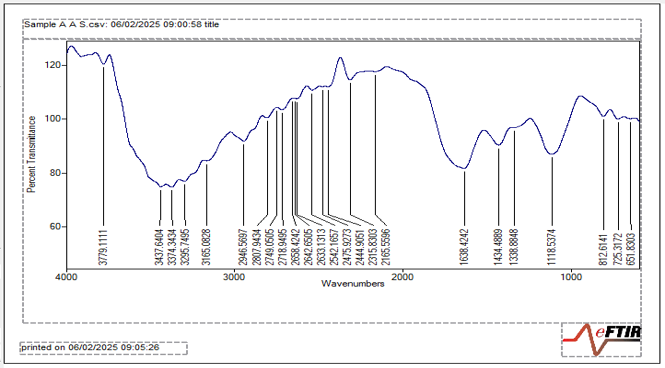
Pain is a common ailment to all humans irrespective of gender or race. Previous reports have shown that Ocimum gratissimum aqueous extracts possess bioactive compounds with analgesic property This study explored the pain-relieving property of the aqueous extract of O. gratissimum using rat models. The extract was characterized with FTIR spectroscopy analysis while the phytochemical screening was done by chemical analysis; toxicology was perfumed using Drosophila melanogaster model. The qualitative photochemistry revealed the presence of alkaloids(+), flavonoid(++), saponins(+), steroids(+++), terpenoids(++), glycoside(+), tannins(+) and phenolics (+) in low to high concentrations while quantitative analysis showed that the extract contains alkaloids (0.012±0.001), flavonoids (0.361±0.002), saponins (5.169±0.001), steroids (0.173±0.001), terpenoids (0.234±0.001),glycosides(0.565±0.002), tannins (0.253±0.001), phenolic (2.163±0.003) all in g / 100 g. The FTIR spectrum revealed some functional groups (OH, NH) consistent with the obtained phytochemical compounds. The high LC50 (2181 mg/10g) obtained from the toxicology suggests a low toxicity of the plant’s aqueous extract. The plant extract orally administered to the acetic acid-induced-writhing-rats significantly decreased the writhes counts in 40 minutes, which could be associated to the extract’s analgesic activity. In low dosage the extract exhibited 44.49% as against the standard drug of 50.93 writhing inhibitions suggesting an impressive activity of the extract of the plant. The presence of alkaloids, saponins, phenolics and others may be responsible for the pain-relieving activity observed. Therefore, this study suggests that the plant may be considered as a potential candidate for analgesic and pain-killer formulations. Further studies are required to establish its activity on menstrual cramps and exploration of the extracts on mechanical and thermal pain-induced models.
References
Achuenu, C., Tanko, S., Nworie, M. O., Edah, A. O., & Adelakun, E. A. (2026). ANALGESIC ACTIVITY, PHYTOCHEMICAL PROFILING AND TOXICITY ASSESSMENT OF ETHANOL EXTRACT FROM OCIMUM GRATISSIMUM LEAVES CULTIVATED IN JOS, NIGERIA. FUDMA JOURNAL OF SCIENCES, 10(5), 249-255.
Ashokkumar, K., Pandian, A., Murugan, M., Dhanya, M. K., & Vellaikumar, S. (2021). Phytochemistry and pharmacological properties of Ocimum gratissimum (L.) extracts and essential oil-A critical review. Journal of Current Opinion in Crop Science, 2(1), 138-148.
Banibrata Das, B. D., Ferdous, T., Mahmood, Q. A., Hannan, J. M. A., Rajib Bhattacharjee, R. B., & Das, B. K. (2013). Antinociceptive and anti-inflammatory activity of the bark extract of Plumeria rubra on laboratory animals.
Bernstein, N., Akram, M., Daniyal, M., Koltai, H., Fridlender, M., & Gorelick, J. (2018). Antiinflammatory potential of medicinal plants: A source for therapeutic secondary metabolites. Advances in agronomy, 150, 131-183.
Borgi, W., Recio, M. C., Ríos, J. L., & Chouchane, N. (2008). Anti-inflammatory and analgesic activities of flavonoid and saponin fractions from Zizyphus lotus (L.) Lam. South African Journal of Botany, 74(2), 320-324.
Cubie, H. A., & Campbell, C. (2020). Cervical cancer screening–the challenges of complete pathways of care in low-income countries: focus on Malawi. Women's Health, 16, 1745506520914804.
Imosemi, I. O. (2020). A review of the medicinal values, pharmacological actions, morphological effects and toxicity of Ocimum gratissimum Linn. Eur J Pharm Med Res, 7(7), 29-40.
Kataria, A., Trasande, L., & Trachtman, H. (2015). The effects of environmental chemicals on renal function. Nature Reviews Nephrology, 11(10), 610-625.
Li, Z., Zhang, H., Wang, Y., Li, Y., Li, Q., & Zhang, L. (2022). The distinctive role of menthol in pain and analgesia: Mechanisms, practices, and advances. Frontiers in Molecular Neuroscience, 15, 1006908.
Musa Y. M., Haruna A. K., Ilyas M., Yaro A. H., Ahmadu A. A., Usman H. (2008). phytochemical, analgesic and anti-inflammatory effects of the ethylacetate extract of the leaves of PSEUDOCEDRELLA KOTSCHYII. African Journal of Traditional, Complementary and Alternative Medicines. 5 (1): 92 - 96
Nisar, M. F., Khadim, M., Rafiq, M., Chen, J., Yang, Y., & Wan, C. C. (2021). Pharmacological properties and health benefits of eugenol: A comprehensive review. Oxidative medicine and cellular longevity, 2021(1), 2497354.
Priyanka, C., Shivika, S., & Vikas, S. (2018). Ocimum gratissimum: a review on ethnomedicinal properties, phytochemical constituents, and pharmacological profile. Biotechnological approaches for medicinal and aromatic plants: conservation, genetic improvement and utilization, 251-270.
Pushpendra K. P., Jyoti S., Saket S. C. (2016). A Detailed Review on Nociceptive Models for the Screening of Analgesic Activity in Experimental Animals. International Journal of Neurologic Physical Therapy. 2(6): 44-50
Rocha, C. A., Félix, L. M., Monteiro, S. M., & Venâncio, C. (2024). Antinociceptive analysis of natural monoterpenes eugenol, menthol, carvacrol and thymol in a zebrafish larval model. Pharmaceuticals, 17(4), 457.
Sofowora, A. (1993). Screening Plants for Bioactive Agents. In: Medicinal Plants and Traditional Medicine in Africa. 2nd ed. Spectrum Books Ltd., Sunshine House, Ibadan. pp. 81-93, 134-156.
Trease, G.E., Evans, M.C. (1997). Textbook of Pharmacognosy, 14th edition. W B Saunders Company Ltd., 24-28 Oval Road, London NW1 7DX, UK and Printed by Harcourt Brace & Company Asia Pte. Ltd. 583 Orchard Road No. 09-01 Forum Singapore 238884. pp. 13-53, 117-139, 293-334, 471-511.
Ugbogu, O. C., Emmanuel, O., Agi, G. O., Ibe, C., Ekweogu, C. N., Ude, V. C., ... & Ugbogu, E. A. (2021). A review on the traditional uses, phytochemistry, and pharmacological activities of clove basil (Ocimum gratissimum L.). Heliyon, 7(11).
Walker, K., Fox, A. J., & Urban, L. A. (1999). Animal models for pain research. Molecular medicine today, 5(7), 319-321.
Winter, C.A., Risley, E.A., Nuss, G.W. (1963). Anti-inflammatory and Anti-pyretic Activities of Indomethacin. J. Pharmacol. Exp. Ther. 141: 369-376.
Zhang, J., Zhang, M., Bhandari, B., & Wang, M. (2024). Basic sensory properties of essential oils from aromatic plants and their applications: A critical review. Critical Reviews in Food Science and Nutrition, 64(20), 6990-7003.
Downloads
Published
Issue
Section
License
Copyright (c) 2026 Chukuka Achuenu, Simon Tanko, Miracle Oluebube Nworie, Alexander Oba Edah, Esther A. Adelakun (Author)

This work is licensed under a Creative Commons Attribution-NonCommercial 4.0 International License.
- Attribution — You must give appropriate credit, provide a link to the license, and indicate if changes were made. You may do so in any reasonable manner, but not in any way that suggests the licensor endorses you or your use.
- NonCommercial — You may not use the material for commercial purposes.
- No additional restrictions — You may not apply legal terms or technological measures that legally restrict others from doing anything the license permits.