
Soil Fertility Improvement through the Influence of Organic Mulch: Comparative Assessment of Leafy Biomass from Selected Tree Species in Sudan Savannah
DOI:
https://doi.org/10.70882/josrar.2026.v3i4.238Keywords:
Organic Mulch, Soil Fertility Improvement, Leafy Biomass, Tree SpeciesAbstract
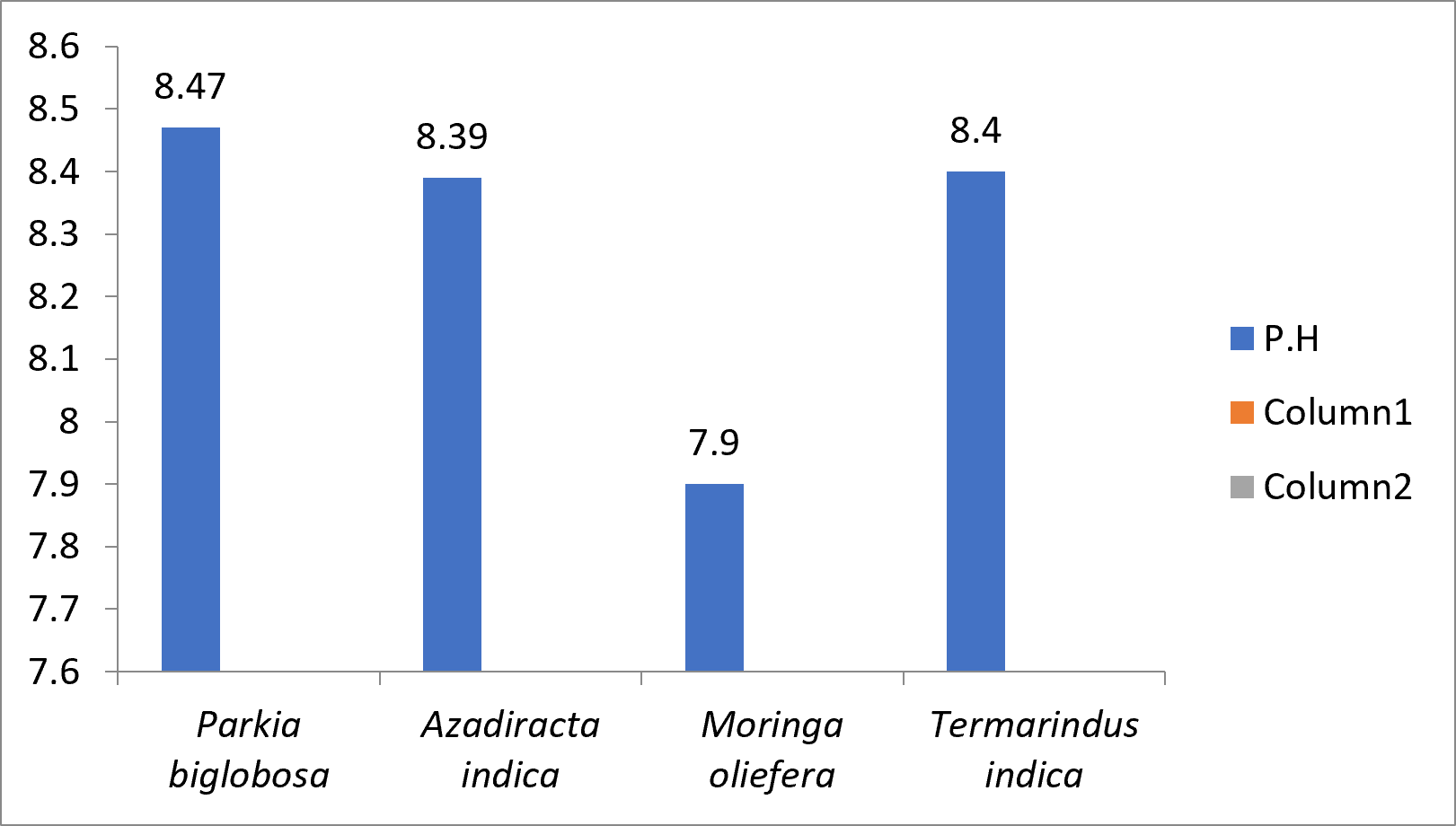
Continuous cropping, erosion, and low organic matter cause declining soil fertility and reducing crop productivity. Farmers possess inadequate access to inorganic fertilizers, while tree leafy biomass remains underutilized as mulch despite its potential to recycle nutrients and improve soil structure. This study, therefore evaluates and compares the effect of organic mulch from selected tree species in sudan savannah. A split-plot design was conducted in a forest nursery using leafy biomass mulch from Azadirachta indica, Tamarindus indica, Parkia biglobosa, and Moringa oleifera. A 10 × 10 m area was divided into 20 micro-plots of 1.5 m × 1.5 m, with 0.25 m buffers. Five treatments including control were replicated four times. Mature leaves were applied at 5 t ha⁻¹. Surface soil (0–15 cm) was sampled at 4 and 8 weeks after application. Soil pH, organic carbon, total nitrogen, and exchangeable Ca, Mg, and K were analyzed using standard laboratory procedures. Data were subjected to two-way ANOVA and means separated with Least Significant Differences at p < 0.05. All mulches maintained a stable, slightly basic soil pH (7.9–8.47), favorable for crop and microbial activity. Parkia biglobosa mulch produced the highest soil organic carbon (3.13%), total nitrogen (0.29%), and magnesium, significantly improving soil fertility. Neem gave the highest available phosphorus, while Moringa provided the highest calcium and potassium levels. Tamarindus indica showed the lowest contributions to organic carbon and nitrogen. P. biglobosa and A. indica were most effective for enhancing soil fertility, with species-specific nutrient benefits supporting targeted mulch selection based on soil deficiencies. Tree leaf mulches from Parkia, neem and Moringa significantly enhanced soil fertility in the Sudan Savannah. Parkia was most effective, boosting organic carbon, nitrogen, and magnesium. A. indica enriched phosphorus while offering pest control, and Moringa increased calcium and potassium. Promote P. biglobosa for general soil improvement, adopt species-specific mulching, and integrate tree mulches into sustainable land management to reduce chemical fertilizer dependence
References
Academia.edu. (2023). Improving soil fertility for maize (Zea mays L.) production using inorganic and organic fertilizer: A case of N:P:K 15:15:15 and biomass of agroforestry trees. Retrieved from https://www.academia.edu/10027943/Improving_soil_fertility_for_maize_Zea_mays_L_production_using_inorganic_and_organic_fertilizer_A_case_of_N_P_K_15_15_15_and_biomass_of_agroforestry_trees
Adewunmi, O.M., Lawal, B.A., and Yusuf, A.A. (2022). Soil pH and Microbial Functionality in Agroecological Landscapes. Environmental Research and Technology, 6(2), 134–142.
Adewuyi, T.O., and Ogunwale, J.O. (2021). Effect of Tree Litter on Soil Carbon and Nutrient Dynamics in the Savannah Zone of Nigeria. Journal of Environmental Management, 292, 112756.
Adjei-Gyapong, T., Boateng, S.A., and Amoako, P.O. (2023). Tree Litter Influence on Soil Chemical Properties in Semi-Arid Ecosystems. Agroforestry Systems, 97(3), 525–536.
Alfredo, S. (2015). The Role of Organic Residues in Soil Health. Journal of Sustainable Agriculture, 39(4), 345-359.
Bationo, A., Waswa, B., Kihara, J., and Kimetu, J. (Eds.). (2023). Advances in integrated soil fertility management in sub-Saharan Africa: challenges and opportunities. Springer Nature.
Bot, A., and Benites, J. (2016). The importance of soil organic matter: Key to drought-resistant soil and sustained food production. FAO Soils Bulletin.
Brady, N.C. and Weil, R.R. (2008). The Nature and Properties of Soils (14th ed.). Prentice Hall.
Ahmed, M. M., Hamid, S. M., Asim, M., Ahmad, A., Raziq, A., Rui, Z., & Zhiyong, P. (2026). Nutrient Cycling and Plant-Microbe Interaction in Alpine Ecosystem: Microbial Mediation of Soil Fertility and Plant Growth. In Biodiversity of Alpine Vegetation: Conservation, Challenges, Prospects, and Solutions (pp. 319-364). IGI Global Scientific Publishing.
Dakora, F. D., and Keya, S. O. (2020). Contribution of Legume Nitrogen Fixation to Sustainable Agriculture in Sub-Saharan Africa. Soil Biology & Biochemistry, 26(8), 1169–1176.
FAO. (2022). Soil Organic Carbon and Climate Change. Food and Agriculture Organization of the United Nations.
FAO. (2023). Alternative and improved land use systems to replace resource depleting shifting cultivation.
Foidl, N., Makkar, H. P. S., and Becker, K. (2001). The potential of Moringa oleifera for agricultural and industrial uses.
Garba, I., Dammo, M. N., and Sani, A. (2021). Characterization of Sandy-Loam Soils of the Sudan Savanna Ecology for Sustainable Crop Production. Nigerian Journal of Soil Science, 31(2), 45-53.
Gidado, A., Bello, O. A., and Yusuf, A. (2023). Climatic Conditions and Agricultural Potential in the Sudan Savanna Zone of Nigeria. Journal of Environmental Geography, 15(1), 22-30.
Gindaba, J., Rozanov, A., and Negash, L. (2015). Assessment of Moringa oleifera Leaf Quality and Its Use as a Green Manure. Agroforestry Systems, 89(5), 797–806.
Kang, B. T. (1993). Alley cropping: past achievements and future directions. Agroforestry Systems, V23(2): 141-155.
Kang, B. T., and Akinnifesi, F.K. (2000). Agroforestry as a strategy for natural resource management and poverty alleviation in the Nigerian savanna
Lal, R. (2020). Soil Organic Carbon: The Hidden Potential. Environmental Sustainability, 3(1): 1–6.
Makkar, H. P. S., and Becker, K. (1996). Nutritional value and anti-nutritional components of whole and ethanol extracted Moringa oleifera leaves.
Mandal, A., Singh, R., and Sharma, K.L. (2021). Soil pH and its Role in Nutrient Availability: A Review. Journal of Soil Science and Plant Nutrition, 21(1), 45–57.
Manfongoya, P. L., Giller, K. E., and Palm, C. A. (1998). Decomposition and nitrogen release patterns of tree pruning and litter. Agroforestry Systems, 38(1-3), 77-97.
Nwosu, J. U. (2012). Effects of organic mulches on soil properties and yield of maize in Southeastern Nigeria. Nigerian Agricultural Journal, 43, 110–115.
Nziguheba, G., Bünemann, E. K., and Smolders, E. (2021). Phosphorus in Agriculture: 100% Zero. Global Phosphorus Institute
Oke, D.O. (2005). Soil Fertility and Management Strategies in the Sudan Savanna of Nigeria. Ibadan University Press.
Oke, D.O., and Odebiyi, K. A. (2007). Traditional cocoa-based agroforestry and forest species conservation in Ondo State, Nigeria. Journal of Agriculture, Ecosystems & Environment, 122(3), 305–311.
Oladoye, A. O., Noah, A. O., and Rafiat, A. O. (2020). Effects of organic mulch on soil fertility: a comparison study using leafy biomass from tree species. Advances in Forest Science, 7(2), 1049-1055.
Olatunde, I. R., Salami, K. D., Ajayi, O. K., Adesanmi V.S., Adeniyi, R.Y., Ogunbela, A. A., Apenah, M.O., Elumalero, G. O., Agboola J. O., Adeniyi, O. O., Abbas, Nazil and Ayanwusi, W. T (2025) Assessment of Sustainable Mushroom Cultivation Practices, Consumer Awareness and Attitude Towards Nutritional Supplements in Dutse, Jigawa State Dutse Journal of Agriculture and Food Security (DUJAFS) Vol. 11 No. 1, June. 2025 pp1-11
Olawoyin, R. O., (2020). Role of leguminous trees in improving soil fertility in Nigerian agroecosystems
Opoku, E., Dzomeku, B. M., Opata, J., Adam, A. M., & Rasche, F. (2026). Perennial legumes Pueraria phaseoloides and Leucaena leucocephala exhibit high potential for fertility restoration of degraded mined soils in Ghana. Journal of Plant Nutrition and Soil Science.
Osonubi, O., and Fagbenro, J.A. (2003). Organic matter and soil fertility management in the tropics. Tropical Soil Bulletin, 5(1), 45–53.
Oyebamiji, Y. O., Ojo, A. O., and Akinola, A. A. (2017). Assessment of Soil Fertility Status under Different Land Use Types in the Sudan Savanna Zone of Nigeria. International Journal of Plant and Soil Science, 16(5): 1-12.
Oyun, M. B., Adeyemo, A. J., Fasinmirin, J. T., Jayeoba, O. J., Ayeni, M. J., & Lawal, S. O. (2025). Evaluation of selected soil physicochemical properties for integrated soil fertility management in agricultural communities in Southern and Northern Nigeria. Discover Applied Sciences, 7(10), 1094.
Pandey, C. B, Sharma, D.K. and Bargali, S. S. (2006). Decomposition and nitrogen release from Leucaena leucocephala in India. Tropical Ecology, V 47(1):149-151.
Salako, F.K, Tian G (2001). Litter and biomass production from planted and natural fallow on a degraded soil in Southwestern Nigeria. Agroforestry Systems. 51: 239- 251.
Salami, K. D., Lawal A. A., Oyebamiji, N and Yisau, J. A. (2020) Effect Of Nitrogen, Phosphorus Fertilizers and Mycorrhizal Nodulation On The Growth And Yield Of Tree Seedlings, FUW Trends In Science & Technology Journal, Www. Ftstjournal.Com E-ISSN: 24085162; P-ISSN: 20485170; April, 2020: Vol. 5 No. 1 Pp
Sanchez, P. A., and Logan, T. J. (1992). Myth and science about the chemistry and fertility of soils in the tropics. In Myths and Science of Soils of the Tropics (pp. 35-46). SSSA Special Publication.
SAS Institute. (2003). SAS/STAT User's Guide, Version 9.1. Cary, NC: SAS Institute Inc.
SAS. (2003). Statistical Analysis Systems. SAS release 9.1 for windows, SAS Institute. Cary, N.C USA, 949 p.
Singh AK, Singh S, Rao VVA, Bagle BG, More TA (2010). Efficiency of organic mulches on soil properties, earthworm population, growth and yield of aonla cv. NA7 in semi-arid ecosystem. Indian Journal Horticultural, v. 67, p. 124-128.
Singh, A. K., Singh, S., Rao, V. V. A., Bagle, B. G., and More, T. A. (2010). Efficiency of organic mulches on soil properties, earthworm population, growth and yield of aonla cv. NA7 in semi-arid ecosystem. Indian Journal of Horticultural, 67, 124-128.
Subapriya, R., and Nagini, S. (2005). Medicinal properties of neem leaves: a review.
Tejada, M., Gonzalex, J. L., Garcia-Martinez, A. M., and Parrado, J. (2007). Application of a green manure and green manure composted with beet vinasse on soil restoration; effects on soil properties. Bioresource Technology, 98(13), 2573-2582.
Wanek, W., Arndt, S. K., and Huber, W. (2008). The use of stable isotopes in soil fertility management. In Stable Isotopes in Ecology and Environmental Science (pp. 268-291). Blackwell Publishing.
Downloads
Published
Issue
Section
License
Copyright (c) 2026 Salami Kaseem Dele, Iroko Olayinka Ajani (Author)

This work is licensed under a Creative Commons Attribution-NonCommercial 4.0 International License.
- Attribution — You must give appropriate credit, provide a link to the license, and indicate if changes were made. You may do so in any reasonable manner, but not in any way that suggests the licensor endorses you or your use.
- NonCommercial — You may not use the material for commercial purposes.
- No additional restrictions — You may not apply legal terms or technological measures that legally restrict others from doing anything the license permits.