
Assessment of Environmental and Health Impacts of Microbial Exposure to Harmattan and Dust Storms in Damaturu, Nigeria
DOI:
https://doi.org/10.70882/josrar.2026.v3i4.224Keywords:
Harmattan haze, Dust storm, Bioaerosols, Exposure, Respiratory infectionsAbstract
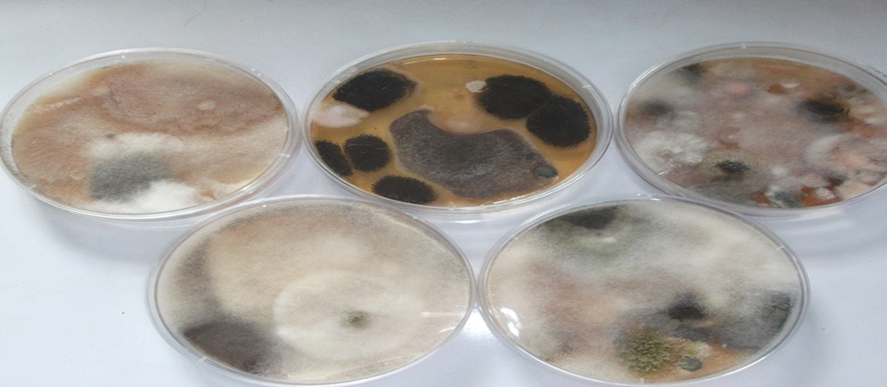
Harmattan winds and episodic dust storms transport mineral dust and biological agents, potentially exacerbating respiratory and systemic morbidity in Sahelian regions like Damaturu, Nigeria. This study assessed household health impacts and microbial loads (bacteria/fungi) in settled dust and airborne samples during Harmattan and Dust storm periods in 2019. A mixed-methods study was conducted using household surveys (n=230 per period) to document health status and microbiological culture of indoor dust and bioaerosols. Households were primarily cement/mud structures with suboptimal ventilation. During Harmattan, children reported high incidences of pneumonia (35%), RTIs (22%), and GITs (18%). Microbial analysis revealed high concentrations: mean fungal loads reached 1.97×10⁵ CFU g−1, 1.97×10⁵ CFU g−1 in dust, with dominant genera including Aspergillus and Penicillium. Findings indicate a significant correlation between dust exposure and increased morbidity, likely amplified by poor ventilation. The microbial loads exceed historical health-based guidelines, suggesting high biological risk. The study relied on morphological microbial identification and lacks concurrent particulate matter (PM) mass monitoring. We recommend seasonal public-health preparedness, including household-level dust-reduction strategies, alongside future studies employing molecular identification and standardized clinical confirmation to better quantify the environmental-health nexus.
References
Aghababaeian, H., Ostadtaghizadeh, A., Ardalan, A., Asgary, A., Akbary, M., Yekaninejad, M. S., & Stephens, C. (2021). Global health impacts of dust storms: A systematic review. Environmental Health Insights, 15, 1–18. https://doi.org/10.1177/11786302211018390
Brook, R. D., Rajagopalan, S., Pope, C. A., III, Brook, J. R., Bhatnagar, A., Diez-Roux, A. V. & Kaufman, J. D. (2010). Particulate matter air pollution and cardiovascular disease: An update. Circulation, 121(21), 2331–2378. https://doi.org/10.1161/CIR.0b013e3181dbece1
Chen, R., Yin, P., Meng, X., Liu, C., Wang, L., Xu, X., Ross, J. A., Tse, L. A., Zhao, Z., Kan, H., & Zhou, M. (2017). Fine particulate air pollution and daily mortality: A nationwide analysis in 272 Chinese cities. American Journal of Respiratory and Critical Care Medicine, 196(1), 73–81. https://doi.org/10.1164/rccm.201609-1862OC
Fussell, J. C., & Kelly, F. J. (2021). Mechanisms underlying the health effects of desert sand dust. Environment International, 157, 106790. https://doi.org/10.1016/j.envint.2021.106790
Gorny, R. L., & Dutkiewicz, J. (2002). Microbial exposure to airborne fungi: Health effects and standards. In M. L. Moss (Ed.), Bioaerosols Handbook (pp. 25–64). CRC Press.
Goudie, A. S., & Middleton, N. J. (2006). Desert dust in the global system. Springer.
Karanasiou, A., Moreno, T., de Miguel, E. (2021). Health effects of desert dust and implications for public health. Science of the Total Environment, 764, 142774. https://doi.org/10.1016/j.scitotenv.2020.142774
Kelly, F. J., & Fussell, J. C. (2015). Air pollution and public health: Emerging hazards and improved understanding of risk. Environmental Geochemistry and Health, 37(4), 631–649. https://doi.org/10.1007/s10653-015-9720-1
Khaniabadi, Y. O., Aslani, H., Hashemi, H., & Naddafi, K. (2017). Desert dust outbreaks and asthma exacerbation in children: A case-crossover
Kok, J. F., Storelvmo, T., Karydis, V. A., Adebiyi, A. A., Mahowald, N. M., Evan, A. T., He, C., & Leung, D. M. (2023). Mineral dust aerosol impacts on global climate and climate change. Nature Reviews Earth & Environment, 4, 71–86. https://doi.org/10.1038/s43017-022-00379-5
Liu, J., Tong, D., Liu, Q.(2022). Bioaerosols and particulate matter: Interactions and health effects- a systematic review. Environment International, 158, 106936. https://doi.org/10.1016/j.envint.2021.106936
Mahowald, N. M., Albani, S., Kok, J. F., & Praveen, P. S. (2020). Global dust emissions and health impacts. Nature Reviews Earth & Environment, 1(12), 747–765. https://doi.org/10.1038/s43017-020-0079-8
Middleton, N., & Goudie, A. (2001). Saharan dust: Sources and trajectories. Transactions of the Institute of British Geographers, 26(2), 165–181. https://doi.org/10.1111/1475-5661.00011
Mescioglu, Esra & Paytan, Adina & Mitchell, Bailey & Griffin, Dale. (2021). Efficiency of bioaerosol samplers: a comparison study. Aerobiologia. 37. 1-13. 10.1007/s10453-020-09686-0.
Naman, K., Ayuba, R. P., Ezekiel, Z., & Godwin, S. (2025). Isolation and Identification of Airborne Pathogen from a General Hospital Wards in Kaduna Metropolis, Kaduna State, Nigeria. Journal of Science Research and Reviews, 2(1), 85-91. https://doi.org/10.70882/josrar.2025.v2i1.32
Pakarinen, J., Hyvärinen, A., Salkinoja‑Salonen, M., Laitinen, S., Nevalainen, A., Mäkelä, M. J., Haahtela, T., & von Hertzen, L. (2008). Predominance of Gram-positive bacteria in house dust in the low-allergy risk Russian Karelia. Environmental Microbiology, 10(12), 3317–3325. https://doi.org/10.1111/j.1462-2920.2008.01723.x
Querol, X., Tobías, A., Pérez, N., Karanasiou, A., Amato, F., Stafoggia, M., Pérez García‑Pando, C., Ginoux, P., & Forastiere, F. (2019). Monitoring the impact of desert dust outbreaks for air quality for health studies. Environment International, 130, 104867. https://doi.org/10.1016/j.envint.2019.05.061
Rao, C. Y., Burge, H. A., & Chang, J. C. S. (1996). Review of quantitative standards and guidelines for fungi in indoor air. Journal of the Air & Waste Management Association, 46(9), 899–908. https://doi.org/10.1080/10473289.1996.10467526
Sterflinger, K., Tesei, D., & Zakharova, K. (2012). Fungi in hot and cold deserts with particular reference to microcolonial fungi. Fungal Ecology, 5(4), 453–462. https://doi.org/10.1016/j.funeco.2011.12.007
Su, H.-J., Wu, P.-C., Chen, H.-L., Lee, F.-C., & Lin, L.-L. (2001). Exposure assessment of indoor allergens, endotoxin, and airborne fungi for homes in southern Taiwan. Environmental Research, 85(2), 135–144. https://doi.org/10.1006/enrs.2000.4113
Downloads
Published
Issue
Section
License
Copyright (c) 2026 Fatima Sule Mohammed, Muhammad Lawan Kamaludden, Mohammed Alhaji Abubakar (Author)

This work is licensed under a Creative Commons Attribution-NonCommercial 4.0 International License.
- Attribution — You must give appropriate credit, provide a link to the license, and indicate if changes were made. You may do so in any reasonable manner, but not in any way that suggests the licensor endorses you or your use.
- NonCommercial — You may not use the material for commercial purposes.
- No additional restrictions — You may not apply legal terms or technological measures that legally restrict others from doing anything the license permits.