
Optimization of Biosurfactant Production Using Bacteria Isolated from Hydrocarbon Contaminated Soil
DOI:
https://doi.org/10.70882/josrar.2026.v3i3.195Keywords:
Biosurfactant, Hydrocarbon, Bacteria, Soil, BioremediationAbstract
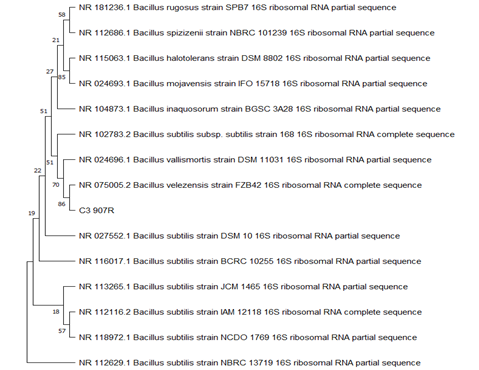
Biosurfactants are surface-active biomolecules produced by microorganisms that have different applications in many environmental problems. This research was aimed to isolate biosurfactant producing bacteria and optimize the conditions like pH, carbon source and incubation time for maximum biosurfactant production. Samples were collected from three points of hydrocarbon contaminated soil in Sokoto Metropolis. Primary screening test including hemolytic activity, drop collapse technique and oil displacement method were performed and species with the best results were picked for complementary screening test like emulsification activity and foaming activity. The viable aerobic heterotrophic bacterial count of all the samples ranges from 13.8x10⁷cfu/g to 2.5x10⁷ cfu/g. A total of sixteen isolates were identified. During primary and complementary screening tests, eight species showed hemolytic activity, five species (5) had drop collapsing activity and eight species showed oil displacement activity. Optimization studies revealed that production of biosurfactant was optimal at pH 6.5, 3% carbon source and 96 hours incubation time respectively. Finally, two strains Psuedomonas aeruginosa and Bacillus subtilis with a high amount of biosurfactant production were identified molecularly with their best hit match similarity was source from the GenBank of NCBI. Therefore, there is need to use biotechnology approaches with a view to improving the performance of bacterial strain.
References
Abdallah, A. H., and Ibrahim, R. A. (2023). Investigation of Physical and Chemical Soil Properties for Two Selected Sites in Khartoum State (Umm Dom Island) and River Nile State (Al Oteib Area) Sudan. Asian Journal of Research in Botany, 9(2), 42-49.
Abo Elsoud, M.M. and Ahmed, M.M. (2021). Classification and Production of Microbial Surfactants. In Microbial Biosurfactants: Preparation, Properties and Applications (pp.65_89). Springer Nature.
Abouseoud, M., Maachi, R., Amrane, A., Boudergua, S. &Nabi, A. (2008). Active Glycolipids from Resting Microbial Cells. Applied and Environmental Microbiology 48:610-617.
Al Musawi, T.J., Al- Kahtani, A.A., and Al- Muhtaseb, A.H. (2021) Biisurfactant Production From Organic Wastes: A Review. Journalof Environmental Management, 286, 112257
Al-Kindi,A.A. and Abed, R. M. (2016). Bioremediation of Petroleum hydrocarbon-Contaminated Soil: A review on Principles, Degradation Mechanusms and Advancements. Frontier in Environmental Science, 4,1-4.
Alsayegh, A. A. and Al- Wahaibi, Y. M. (2015). Biosurfactants: Production, Properties and Applications. Journal of Petroleum Science and Engineering, 135, 1-11.
Al-Wahaibi, M.A., Al-Sayegh, A.H., &Al-Tamimi, M. (2014). Biosurfactants for oillspill remediation: A reviewJournal of Environmental Science and Health, Part A 49 (12), 1333-1345.
Aminu, A., Usman, M. D., Mohammed, N., Ashafa, M. A., Saidu, M., Umar, A., Salim, C. A., Saifullah, G., Shafi'u, A., Usman, M., &Ukwaja, V. C. (2023). Identification and Screening of Biosurfactant Producing Bacteria from Mechanic Workshops Soil in Gusau Metropolis, Nigeria. UMYU Scientifica, 2(3), 46-52.
Anjum, F., Gautam, G., Edgard, G., &Negi, S. (2016). Biosurfactant Production Through Bacillus sp. MTCC 5877 and its Multifarious Applications in Food Industry. Bioresource Technology, 213, 262-269.
Balakrishnan, S., Arunagirinathan, N., Rameshkumar, M. R., Indu, P., Vijaykanth, N., Almaary, K. S., &Chen, T. W. (2022). Molecular Characterization of Biosurfactant Producing Marine Bacterium Isolated from Hydrocarbon-Contaminated Soil Using 16S rRNA Gene Sequencing. Journal of King Saud University-Science, 34(3), 101871.
Banat, I. M., Franzetti, A., Gandolfi, I., Bestetti, G., Martinotti, M.G., Fracchia, L. &Merchant, R. (2010). Microbial Biosirfactants Production, Applications and Future Potential. Applied Microbiology and Biotechnology, 87(2), 427-444.
Bazsefidpar, S., Mokhtarani, B., Panahi, R., &Hajfarajollah, H. (2019). Over Production of Rhamnolipids by Fed-Batch Cultivation of Psuedomonas aeruginosa in Lab- Scale Fermenter Under Light DO Control. Biodegradation, 30, 59-69.
Begum, S., Rath, S.K .and Rath, C.C. (2022). Applications of Microbial Communities for the Remediation if Industriakdnd Mining Toxic Metal Waste: A Review. Geomirobiology Journal, 39 (3-5), 282-293.
Bhardwaj, G., Cameotra S.S. and Chopra, H.K. (2013). Biosurfactants from Fungi: A Review. Journal of Petroleum and Environmental Biotechnology 4(6):1000160.
Bidja Abena, M.T., Chen, G., Chen, Z., Zheng, X., Li, S., Li, T., and Zhong, W. (2020). Microbial Diversity Changes and Enrichment of Potential Petroleum Hydrocarbon Degraders in Crude Oil- Diesal and Gasoline-Contaminted Soil. Biotechnology, 10, 1-15.
Brumano, L.P., Soler, M.F. and da-Silva, S.S. (2016). Recent Advances in Sustainable Production and Application of Biosurfactants in Brazil and Latin America. Industrial Journal of Biotechnology, 12, 31–39.
Cheesbrough, M. (2006). District laboratory practice in tropical countries, part 2. Cambridge university press.
Chen, J., Wu, Q., Hua, Y., Chen, J., Zhang, H., &Wang, H. (2017). Potential Applications of Biosurfactant Rhamnolipids in Agriculture and Biomedicine. Applied microbiology and biotechnology, 101 (23), 8309-8319.
Chigede, N., Chikwambi, Z., Mpofu, I. D., &Madzimure, J. (2023). Isolation and Characterization of Biosurfactant-Producing Microbes Isolated from the Gastrointestinal System of Broiler Birds Fed a Commercial Diet. Animal Biotechnology, 1-13.
Christova, N., Tuleva, B., Kril, A., Georgieva, M., Konstantinov, S. and Terziyski, I. (2013) Chemical Structure and In Vitro Antitumor Activity of Rhamnolipids from Pseudomonasaeruginosa BN10. Biotechnology and Applied Biochemistry.170:676–89.
Cooper, D.G. and Cavalero, D. A. (2003). The Effect of Medium Composition on the Structure and Physical State of Sophorolipids Produced by Candida bombicola ATCC 22214. Journal of Biotechnology.103:31–41.
Das, S. and Rao,K.V.B (2024). A Comprehensive Review of Biosurfactant Production and its uses in the PharmaceutucalIndustry.Archea Microbiology 206,60.
Da-Silva, V.L., Lovaglio, R.B., Tozzi, H.H., Takaki, M. and Contiero, J. (2015). Rhamnolipids: A New Application in Seeds Development. Journal of Medical and Biological Science Research.1:100 doi.org/10.1007/978-3-319-26800-2_5.
Desai, J. D., Banthia, N.&Desai, A. J. (2018). Biosurfactants from halophilic bacteria: A Review. Bioresource Technology, 252, 37-47, 2018.
Dossel J, Meyer-Hoffert U, Schroder JM, Gerstel U. (2012). Pseudomonas aeruginosa Derived Rhamnolipids Subvert the Host Innate Immune Response Through Manipulation of the Human Beta-Defensin-2 Expression. Cellular Microbiology.14:1364–75.
Ejairu, K.O., and Okiotor, M.E. (2022). “Effect of Oil Spill on Physicochemical Properties of Soil Spilled Sites in Kokori, Ethiope East Local Government Area, Delta State, Nigeria”. Journal of Applied Sciences and Environmental Management. 26 (11) 1869-1872.
Ekambaram, G., Palanisamy, P., Natchimuthu, K., Sunita, V., Mukesh, K. A. &Balasubramani, R. (2022). Biosurfactants: Potential and Eco- Friendly Material for Sustanable Agriculture and Environmental Safety: A Review Agronomy12 (3), 662.
Ekprasert, J., Kanakai, S. &Yosprasong, S. (2020). Improved biosurfactant production by Enterobacter cloacae B14, stability studies, and its antimicrobial activity. Polish Journal of Microbiology, 69 (3): 273.
Elgaliza, A., Althalb, H., Elmusrati, I., Ahmed, H.M., & Banat, I.M. (2023). Remediation Approaches to Reduce Hydrocarbon Contamination in Petrolum-Polluted Soil.Microorganism, 11 (10), 2577.
El-Shahawy, M.R. (2014). Biosynthesis of Biosurfactant by Egyptian Local Bacterial Isolates Using Different Agricultural Wastes. Journal of Nuclear Technology Applied Sciences, 2(4), 409-417.
Erum, I., and Ahmed, S. (2013). Biosurfactants: A Review of their Potential and Applications. Journal of Basic and Applied Sciences, 9, 402-410
Estefania, E., Abel, F., Antoni, S., Xavier, F. &Teresa, G. (2022). Microbial Biosurfactants: A Review of Recent Environmental Applications. Bioengineered 13 (5), 12365-12391.
Fardami A.Y., Kawo, A.H., Yahaya, S., Riskuwa-Shehu, M.L., Lawal, I. & Ismail, H.Y. (2022). “Isolation and Screening of Biosurfactant-Producing Bacteria from Hydrocarbon-Contaminated Soil in Kano Metropolis, Nigeria” Journal of Biochemistry, Microbiology and Biotechnology. 10(1)52-57
Fardami, A.Y., Abubakar, U., Ibrahim, U.B. Dankaka, S.M. &Kawo, A.H (2020). “Biosurfactant Production Potential of Bacillus Obtained from Dye Effluent” African Journal of Microbiology Research. 14 (2), 71-76.
Franzetti, A., Gandolfi, I., Bestetti, G., Smyth, T.J.&Banat, I.M. (2010). Production and Applications if Trehalose Lipids Biosurfactants. European Journal of Lipid Science and Technology, 112 (6), 617-627.
Furuta, A., Ikegami, M., Yaguchi, T., Ito, H., Tanaka, K., Nishinari, K.&Nitta, Y. (2023). Transparent Thermoreversible Gels of Β-(1→ 6)-Branched Β-(1→ 3)-Glucan Derived from the Cauliflower Mushroom SparassisCrispa. Food Hydrocolloids, 142, 108-766.
Habib, S. A., and Ibrahim, A. (2023). Actinobacter Biosurfactants Producer Isolated from Marsh Sediments in Iraq. Journal of Survey in Fisheries Sciences, 10(1S), 5133-5142.
Harley, J.P. and Prescott, L.M. (2002). Laboratory Exercises in Microbiology. 5th Edition, McGraw-Hill Companies, New York, United State of America.
Harold, J., Benson, A. and Brown,E. (2004). Benson's Microbiological Applications: Laboratory Manual in General Microbiology.
Haruna H.G. (2023).” Determination of Physicochemical Properties of Spent Engine Oil Polluted Soils Sites in Bali and its Environs, Taraba State, Nigeria” American Journal of Food Science and Technology 2(2) 14-17.
Hausmann, R., and Syldatk, C. (2014). Types and Classification of Microbial Surfactants. Biosurfactants: Production and Utilization—Processes, Technologies, and Economics, 159, 1.
Hiltunen, K., Seppälä, J.V., Itävaara, M. &Härkönen, M. (2017) The Biodegradation of Lactic Acid-Based Poly (ester-urethanes). Journal of Environmental Polymer Degradation 5: 167–173.
Hu X., Wang, C. and Wang, P. (2015). Optimization and Characterization of Biosurfactant Production from Marine Vibrio sp. Strain 3B-2. Frontier of Microbiology. 6:976
Humberto, B.S., Sobrinho-Julaina M., Luna,Raquel D., Rufino Ana Lucia F.&Leonie A. (2014). Biosurfactants: Classification, Properties and Environmental Applications. Biotechnology, 11: 7-8.
Hussain, T., Khan, A.A. and Khan, M.A. (2021). Biocontrol of Soil Borne Pathogen of Potato Tuber Caused by Rhuzoctoniasolonithrough Biosurfactant based Bacillus strain. Journal of Nepal Agricultural Research Council, 7, 54-66.
Ibrahim, M. L., Ijah, U. J. J., Manga, S. B., Bilbis, L. S.&Umar, S. (2013). Production and Partial Characterization of Biosurfactant Produced by Crude Oil Degrading Bacteria. International Biodeterioration and Biodegradation, 81, 28-34.
Ibrahim, U.B., Ijah, U.J.J., Riskuwa, M.L. &Manga, S.B. (2014). Microbial and Heavy Metals Qualities of Agricultural Soil of Tsafe Local Government Area in Zamfara State Nigeria. Journal of Zoological and Bioscience Research, 1(2):18-30
Ijah, U. J. J., and Antai, S. P. (2003). Removal of Nigerian Light Crude Oil in Soil Over a 12-Month Period. International Biodeterioration and Biodegradation, 51(2), 7-9.
Imran, M., Asad, M. J., Hadri, S. H.&Mehmood, S. (2012). Production and Industrial Applications of Laccase Enzyme. Journal of Cell and Molecular Biology, 10(1), 1-5.
Jiraporn, T.H. and Niran, R. (2003). “Production and Characterization of Biosurfactants from Bacilluslicheniformis ”Bioscience, Biotechnology and Biochemistry, 67(6), 1239-1244.
Juo, A.S.R. (1979). Selected Methods for Soil and Plant Analysis. International Institute of Tropical Agriculture Manual Series (Nigeria). pp136
Kaur, K., Sangwan, S. &Kaur, H. (2017). Biosurfactant Production by Yeast Isolated from Hydrocarbon Polluted Environment, Environmental Monitory Assessment 189(12):603. https://doi.org/10.1007/s10661-017-6311
Kaur, S., Singh, S.&Kaur, I. (2021). Biosurfactants: A Promising Tool for Drug Delivery. International Journal of Pharmaceutics, 596, 117730.
Khokhar, H.S., and Gornall, J. L. (2012). Effect of Process Parameters on Quality and Shelf Life of fortified fruit beverages. Journal of Food Sciences and Technology 49 (5), 588.
Kumar, A., Mishra, R., Srivastava, A., Garg, S. K., Singh, V. P.&Arora, P. K. (2019). Diversity of Hexavalent Chromium-Reducing Bacteria and Physicochemical Properties of the Kanpur Tannery Wastewater. Environmental Chemistry and Ecotoxicology, 5, 205-212.
Liu, W. J., Duan, X. D., Wu, L. P.&Masakorala, K. (2018). Biosurfactant Production by Pseudomonas aruginosaSNP0614 and its Effect on Biodegradation of Petroleum. Applied biochemistry and Microbiology, 54, 155-162.
Liu, Y., and Li, H. (2022). Biosurfactant Production by Acinetobacter Species: A Review. Journal of Environmental Science and Health, Part A, 55(12), 1183-1193.
Luna, J.M., Rufino, R.D., Jara, A.M.A.T., Brasileiro, P.P.F. &Sarubbo, L.A. (2015). Environmental Applications of the Biosurfactant Produces by Candida sphaerica Cultivated In Low-Cost Substrates. Colloids And Surfaces: A Physicochemical and EngineeringAspects, 480: 413–418.
Mondal, C., Nabarun, M., UrmiMustafi, M.S.B.&Asif, H. (2024). Contamination of microplastics in the marine food web with special reference to seafood: Present status and future concern." In Spatial Modeling of Environmental Pollution and Ecologica*l Risk, pp. 175-207.
Mulligan, C.N. (2005). Environmental Applications for Biosurfactants. Environmental Pollution, 133: 183–198.
Ng, Y. J., Lim, H.R., Khoo, K.S., Chew, K.W., Chan, D.J.C., Bilal, M.&Show, P.L. (2022). Recent Advances of Biosurfactants for Waste and Pollution Bioremeduation: Substitutions of Petroleum -Based Surfactants. Environmental Research, 212,113126.
Ochei, J. and Kolhatkar, A. (2000). Medical Laboratory Sciences, Theory and Practice. Tata McGraw Hill Publishers, New Delhi, India.
Oghoje, S. U. (2023).” Effects of Bioremediation of Petroleum Pollution on Soil Physicochemical Properties and Metals Bioavailability in South- South Nigeria”. Nigerian Journal of Science and Environment 21 (1) 337 – 357.
Ogru, K.I. and Olannye, P.G. (2021). “Microbial Studies of Biosurfactant Producing Bacteria from Crude Oil Contaminated Soil” J. Appl. Sci. Environ. Manage. 25 (9) 1729-1735.
Ogunseitan, A.A. and Ilori, M. O.(2020). Assessment of the Impact of Crude Oik Pollution on Soil Microbial Communities in a Tropical rainforest ecosystem. Journal of Environmental Management, 262, 110204.
Oliveira, A.C., Costa, M.C.&Silva, R.R. (2017). Influence of pH on biosurfactant Production by Bacillus subtilis.Journal of surfactants and Detergents,2(1), 1-8.
Packwa, X. and Zhang, Y. (2011).Production and Characterization ofBiosurfactantsfrom strain X-23. Journal of Applied Microbiology,110(1):743-752.
Parisa, M. and Gholamreza, S. (2020). Biosurfactants: Properties, Production and Applications. Journal of Environmental Chemical Engineering, 8(4),104048.
Premei, S., Inoue, C. &Chien, M.F (2020). “Potential of Biosurfactants’ Production on Degrading Heavy Oil by Bacterial Consortia Obtained from Tsunami-Induced Oil-Spilled Beach Areas in Miyagi, Japan”Journal of Marine Scienceand Engineering: 8,577.
Prescott, L. M., Harley, J. P.&Klein, D. A. (2002). Microbiology. Wm. C. Brown.
Ray, S., Sankhyan, S., Sonkar, M. &Kumar, P. (2023). Role of Biosurfactant in the Remediation of Emerging Pollutants.
Ribeiro, B. G., De-Veras, B. O., Dos-Santos, Aguiar, J., Guerra, J. M. C.&Sarubbo, L. A. (2020). Biosurfactant produced by Candida utilis UFPEDA1009 with potential application in cookie formulation. Electronic Journal of Biotechnology, 46, 14-21.
Rodrigues, L. R., Teixeira, J. A., van der Mei, H. C.&Oliveira, R. (2006). Physicochemical and Functional Characterization of a Biosurfactant Produced by Lactococcuslactis 53. Colloids and Surfaces Biointerfaces, 49(1), 79-86.
Ruskana, J., Andrew, M., Bridatti, M., Tsianou, A. &Paschalis, A.(2020). Biosurfactants, Natural Alternatives to Synthetic Surfactants: Physicochemical Properties and Applications.Advances in Colloid and Interface Science, volume 275.
Saeki, H., Sasaki, M., Komatsu, K., Miura, A.&Matsuda, H.. (2009). Oil Spills remediation by using the Remediation Agents JE1058BS that Contains a Biosirfactant Produced by Gordonia sp.Strain JE_1058.Bioresource Technology, 100(2), 572-577.
Saranraj, P., Sayyed, R. Z., Sivasakthivelan, P., Devi, M. D., Al Tawaha, A. R. M.&Sivasakthi, S. (2021). Microbial Biosurfactants Sources, Classification, Properties and Mechanism of Interaction. In Microbial Surfactants (pp. 243-265).
Satpute, S. K., Banat, I.M., Dhakephalkar, P.K., Banpurkar, A.G. &Chopade, B.A. (2017). Biosurfactants, Bioemulsifiers and Exopolysaccharides from Marine Microorganisms. Biotechnology Advances 28: 436–450.
Sharma, A.K., Sharma, V., Saxena, J., Chandra, R., Alam, A. &Prakash, A. (2015). Isplation and Screening of Amylolytic Bacteria from Soil.International Journal of Scientific Research in Agriculture Sciences, 2 (7) 159- 165.
Shoeb, E., Akhlaq, F., Badar, U., Akhter, J. &Imtiaz, S. (2013). Classification and Industrial Applications of Biosurfactants. Academic Research International, 4(3),243.
Ukaegbu, C. I., Shah, S. R., Alara, R. O.&Thonda, O. A. (2023). Biosurfactants as Potential Antitumor Agents. In Advancements in Biosurfactants Research. (pp. 439-460).
Wang, D., Weijun ,G., Shujun, K. &Tiaojian, X. (2020). Estimating off Shore Exposure to Soil Spill Impacts Based on a Statistical Forecast Model .Marine Pollution Bulletin, 156 .
Wei, Y. and Shao, H. (2022). Soil Contamination and Conservation. In River Basin Environment: Evaluation , Management ans Conservation (pp. 289-309).
Xu, H., Dai, C., Tang, Y., Xu, X., Umego, E. C.&Ma, H. (2022). The Selective Breeding and Mutagenesis Mechanism of High-yielding Surfactin Bacillus subtilis Strains with Atmospheric and Room Temperature Plasma. Journal of the Science of Food and Agriculture, 102(5), 1851-1861.
Xu, S., Lehmann, R.G., Miller, J.R. &Chandra, D. (2023) Degradation of silicone polymer as influenced by clay minerals. Environmental Science Technology, 32:1199–1206.
Youssef, N.H., Duncan, K.E., Nagle, D.P., Savage, K.N. &Knapp, R.M. (2004). Comparison of Methods in Detection of Biosurfactant Production by Diverse Microorganisms. Journal of Microbiological Methods 56, 339-347.
Zhang, W., C.A., Kenneth, L., Zhi, C.&Qi, F. (2021). Factors Influencing the Fate of Oil Spilled on Shorelines: A Review. Environment Chemistry Letters, 19, 1611-1628.
Zhao, L., Li, Y. and Liu, Z. (2021). Impact of Oil Pollution on Soil Microbial Communities and their Functional Genes . Journal of Hazardous Materials, 402,123506.
Downloads
Published
Issue
Section
License
Copyright (c) 2026 Asiya Gidado Yabo, Aliyu Sarkin Baki, Abdullahi Bako Rabah, Aliyu Mamuda, Umar Musa Abdullahi, Aisha Habibu, Hannatu Bello, Aisha Aminu Mode, Bahira Bello Yabo (Author)

This work is licensed under a Creative Commons Attribution-NonCommercial 4.0 International License.
- Attribution — You must give appropriate credit, provide a link to the license, and indicate if changes were made. You may do so in any reasonable manner, but not in any way that suggests the licensor endorses you or your use.
- NonCommercial — You may not use the material for commercial purposes.
- No additional restrictions — You may not apply legal terms or technological measures that legally restrict others from doing anything the license permits.