A Comparative Machine Learning Framework for Early Diabetes Risk Prediction
DOI:
https://doi.org/10.70882/josrar.2026.v3i3.164Keywords:
Diabetes prediction, Machine Learning, Disease, Feature SelectionAbstract
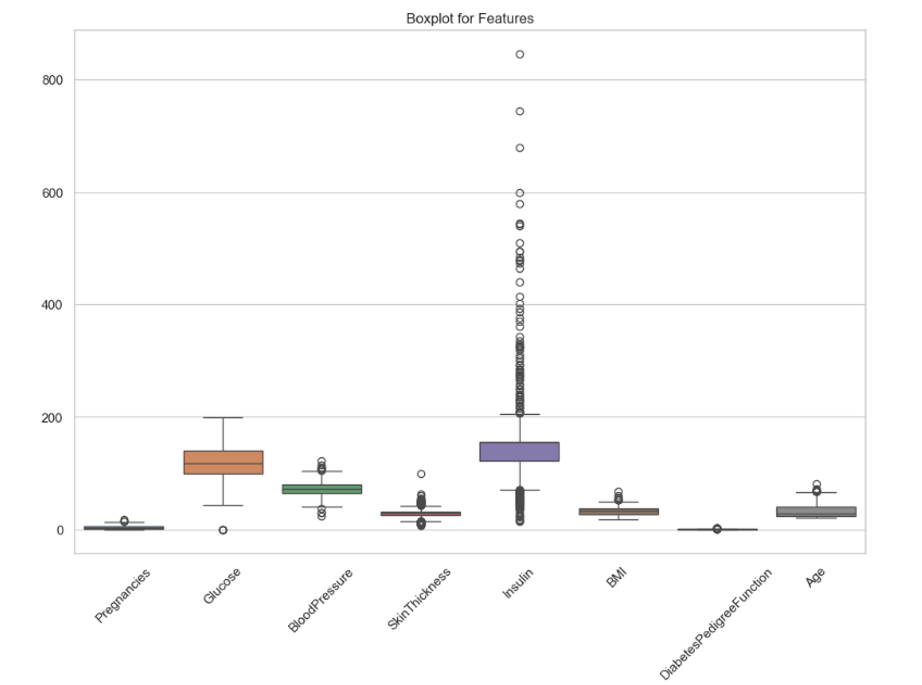
Diabetes is one of the leading causes of morbidity and mortality worldwide. To avoid difficult management of the condition, there is need to predict early onset of the condition. This study investigated the application of machine learning techniques and exploratory data analysis to forecast early-onset of diabetes using the PIMA Indian dataset. Preprocessing included handling missing values and standardization, leading to the development and evaluation of 5 models which include Logistic Regression, K-Nearest Neighbors, Random Forest, Support Vector Machine, and Neural Network. Exploratory analysis identified glucose concentration, body mass index, and age as the most influential features. Random Forest achieved the highest accuracy (0.74%) while both Random Forest and Logistic Regression attained the best ROC-AUC score of 0.81%. Feature importance analysis emphasized the predictive significance of glucose and BMI, aligning with clinical knowledge of diabetes risk factors. Despite the promising results the study acknowledged limitations related to the PIMA dataset's demographic scope and the moderate complexity of neural networks, highlighting areas for future enhancement. Ethical considerations, including data privacy and algorithmic bias, were addressed to ensure responsible model development.
References
Chari, K. K., Babu, M. C., & Kodati, S. (2019). Classification of diabetes using Random Forest with feature selection. International Journal of Innovative Technology and Exploring Engineering, 9(1), 1295–1300. https://doi.org/10.35940/ijitee.l3595.119119
Dharmarathne, G., Jayasinghe, T. N., Bogahawaththa, M., Meddage, D. P. P., & Rathnayake, U. (2024). A novel machine learning approach for diagnosing diabetes with a self-explainable interface. Healthcare Analytics, 5, 100301. https://doi.org/10.1016/j.health.2024.100301
Firdous, S., Wagai, G. A., & Sharma, K. (2022). A survey on diabetes risk prediction using machine learning approaches. Journal of Family Medicine and Primary Care, 11(11), 6929–6934. https://doi.org/10.4103/jfmpc.jfmpc_502_22
Ganie, S. M., Pramanik, P. K. D., Malik, M. B., Mallik, S., & Qin, H. (2023). An ensemble learning approach for diabetes prediction using boosting techniques. Frontiers in Genetics, 14, 1252159. https://doi.org/10.3389/fgene.2023.1252159
Gianfrancesco, M., Tamang, S., Yazdany, J., & Schmajuk, G. (2018). Potential biases in machine learning algorithms using electronic health record data. JAMA Internal Medicine, 178(11), 1544–1554. https://doi.org/10.1001/jamainternmed.2018.3763
Khanam, J. J., & Foo, S. Y. (2021). A comparison of machine learning algorithms for diabetes prediction. ICT Express, 7(4), 432–439. https://doi.org/10.1016/j.icte.2021.02.004
Kaur, H., & Kaur, G. (2019). Voting-based classification for diabetes prediction. International Journal of Recent Technology and Engineering, 8, 913–918. https://doi.org/10.35940/ijrte.b1172.0782s619
Perveen, S., Shahbaz, M., Ansari, M. S., Keshavjee, K., & Guergachi, A. (2020). A hybrid approach for modeling type 2 diabetes mellitus progression. Frontiers in Genetics, 10, 1076. https://doi.org/10.3389/fgene.2019.01076
Zafar, F., Raza, S., Khalid, M. U., & Tahir, M. (2019). Predictive analytics in healthcare for diabetes prediction. Proceedings of the International Conference on Data Science, 253–259. https://doi.org/10.1145/3326172.3326213
Downloads
Published
Issue
Section
License
Copyright (c) 2026 Abdulrahman Nasiru Sada, Eli Adama Jiya, Yahaya Muhammad Umar, Umar Faruk Mukhtar (Author)

This work is licensed under a Creative Commons Attribution-NonCommercial 4.0 International License.
- Attribution — You must give appropriate credit, provide a link to the license, and indicate if changes were made. You may do so in any reasonable manner, but not in any way that suggests the licensor endorses you or your use.
- NonCommercial — You may not use the material for commercial purposes.
- No additional restrictions — You may not apply legal terms or technological measures that legally restrict others from doing anything the license permits.