
Isolation and Molecular Characterization of Indigenous Bacteria from Tannery Effluent and Their Potential for Bioremediation of Heavy Metals
DOI:
https://doi.org/10.70882/josrar.2026.v3i3.194Keywords:
Bacteria, Tannery Effluents, Heavy Metals, Contamination, BioremediationAbstract
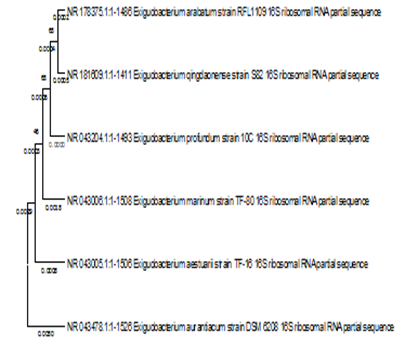
Tannery effluent refers to as wastewater from the process of converting skin and hides into leather. This study was aimed at the Isolation and molecular characterization of indigenous bacteria from Tannery effluent sites including Unguwar Karaye A (UKA), Unguwar Karaye B (UKB), Unguwar Rogo A (URA) and Unguwar Rogo B (URB). Effluent Sample were collected in sterile bottles and serially diluted (10-1 to 10-7) before being inoculated on to nutrient agar using spread or pour plate techniques., after incubation at 30co to 37oc for 24 to 48hours, distinct colonies were isolated, and identified through Gram staining, biochemical test and molecular methods such 16S rRNA sequencing. The physicochemical analysis showed acidic pH ranging from 5.25±0.19 to 6.87±0.29 with temperatures between 34oc±0.82 and 37oc±1.25. Total viable bacterial count ranges from 1.32×10⁷ to 1.75×10⁷cfu/g. Twelve (12) bacterial species were identified, with Bacillus subtilis being the most predominant (21.1%), followed by Exiguobacterium profundum (10.5%), Bacillus pumilus (10.5%), Pseudomonas aeruginosa (10.5%), Staphylococcus aureus (10.5%), while Bacillus licheniformis (5.3%), Pseudomonas fluorescence (5.3%), Pseudomonas putida (5.3%), Enterobacter cloacae (5.3%), Enterobacter aerogenes (5.3%), Escherichia coli (5.3%) and Acinetobacter baumanii (5.3%) were the least prevalent. Chromium concentration from 400mg/L was reduced by bacteria Exiguobacterium profundum to 0.523 ±0.004 and 0.175±0.02 within 48hours and 96hours, outperforming Pseudomonas aeruginosa. Molecular identification confirmed the most efficient isolate as Exiguobacterium profundum strain 10C. This study highlights its strong potential for chromium bioremediation in tannery effluents.
References
Adejube, A. A. H., Garba, P. Y., Halid, A., Yakubu, A., Anteyi, A., Ovye, A., and Buba, M. A. (2018). Analysis of heavy metals concentration in effluents, groundwater and top soil at textile and tanneries waste dumped Site located in Challawa industrial estate Kano-State, Nigeria. Int J ChemChem Process, 4(2), 62-70.
Adeniyi, M., Titilawo, Y., Oluduro, A., Odeyemi, O., Nakin, M., & Okoh, A.I. (2018). Molecular identification of some wild Nigerian mushrooms using internal transcribed spacer: polymerase chain reaction. Amb Express, 8(1), 148.
Agu, K. C. (2015). Isolation and characterization of microorganisms from oil polluted soil in Kwata, Awka South, Nigeria. American Journal of Current Microbiology, 3(1), 46-59.
Ahmed, D., Maraz, K. M., and Khan, R. A. (2021). Prospects and challenges of chrome tanning: approach a greener technology in leather industry. Scientific Review, 7(3), 42-49.
Ake, A. H. J., Hafidi, M., Ouhdouch, Y., and El Fels, L. (2022).Physico-chemical characterization and pollutant charge of industrial effluents from tanneries under semi-arid climate. DESALINATION AND WATER TREATMENT, 260, 148-160.
Ake, A. H. J., Hafidi, M., Ouhdouch, Y., Jemo, M., Aziz, S., and El Fels, L. (2023). Microorganisms from tannery wastewater: Isolation and screening for potential chromium removal. Environmental Technology and Innovation, 31, 103167.
Akotey, A. N. A. O., Amponsah, I. K., Armah, F. A., Turkson, B. K., Addotey, J. N., Osei, Y. A., and Dickson, R. A. (2024). Quality characteristics and HPLC detection of phosphodiesterase inhibitors in some herbal capsules indicated for male sexual disorders in Ghana. Future Journal of Pharmaceutical Sciences, 10(1), 123.
Alam, M. Z., and Malik, A. (2008). Chromate resistance, transport and bioreduction by Exiguobacterium sp. ZM-2 isolated from agricultural soil irrigated with tannery effluent. Journal of bsic microbiology, 48 (5), 416-420.
Alori, E. T., Osemwegie, O. O., Ibaba, A. L., Daramola, F. Y., Olaniyan, F. T., Lewu, F. B., and Babalola, O. O. (2024). The Importance of Soil Microorganisms in Regulating Soil Health. Communications in Soil Science and Plant Analysis, 55(17), 2636-2650.
American Public Health Association (APHA) (1999). Standard Methods for the examination of Water and Wastewater, 20th edition. American Public Health Association, American Water Works Association, Water Environmental Federation.
Augustine, E. I. (2024). Identification of Proteus Vulgaris using Series of Biochemical Test and Staining Technique: Ecology, Pathogenicity (Enteric Pathogen), Description and Prevention of Its Diseases. International Journal of Contemporary Microbiology, 10(1).
Badawi, A. K., and Hassan, R. (2024). Optimizing sludge extract reuse from physico-chemical processes for zero-waste discharge: A critical review. Desalination and Water Treatment, 319, 100527.
Bala, S., Garg, D., Thirumalesh, B. V., Sharma, M., Sridhar, K., Inbaraj, B. S., and Tripathi, M. (2022). Recent strategies for bioremediation of emerging pollutants: a review for a green and sustainable environment. Toxics, 10(8), 484.
Balakrishnan, S., Arunagirinathan, N., Rameshkumar, M. R., Indu, P., Vijaykanth, N., Almaary, K. S., and Chen, T. W. (2022). Molecular characterization of biosurfactant producing marine bacterium isolated from hydrocarbon-contaminated soil using 16S rRNA gene sequencing. Journal of King Saud University-Science, 34(3), 101871.
Benson, M. (2001). Microbiological Applications Laboratory Manual (Eighth edition). The McGraw-Hill, New York.
Bergey, D. H. and Holt, J.G. (2000). Bergey's Manual of Determinative Bacteriology.9th edition Philadelphia: Lippincott William and Wilkins.
Bhardwaj, A., Kumar, S., and Singh, D. (2023). Tannery effluent treatment and its environmental impact: a review of current practices and emerging technologies. Water Quality Research Journal, 58(2), 128-152.
Campos, V. L., Moraga, R., Ya'nez, J., Zaror, C.A. and Mandaca, M. A. (2005). Chromate Reduction by Serratiamarcescens Isolated from Tannery Effluents. Bulletin of Environmental Contamination Toxicology, 75:400-406.
Carvalho, R. L. D., Okeke, B. C., Damarco, C. F., Pieniz, S., Garcia da Cunha, A., Carlos, F. S., and Andreazza, R. (2025). Chromium bioremediation potential of Exiguobacteriumacetylicum – a bacterium isolated from the rhizosphere of H. grumos. Bioremediation Journal,1 – 16.
Chandra, R. Bharagava, R.N, Kapley, A. and Purohit, H.J. (2011). Bacterial diversity, organic pollutants and their metabolites in two aeration lagoons of common effluent treatment plant (CETP) during the degradation and detoxification of tannery wastewater.Bioresource Technology, 102: 2333–2341.
Cheesbrough, M. (2006). District laboratory practice in tropical countries. Part 2. Low Price Edition. Cambridge University Press, London, pp28-90.
Daddi, T., Ahmad, S., and Albano, F. (2024). Fostering environmental sustainability of leather industry: environmental impact assessment and improvement prospects for leather-tanning technologies. Environmental Science and Pollution Research, 1-18.
Didiugwu, C.M., & Chukwura, E.I. (2023). Crude oil pollution effect on agricultural soil properties germination of bean (Vigna unguiculata (/i) L.) Seed. Biological and environmental Sciences Journal for the Tropics, 20(3), 49-58.
Fiandini, M., Nandiyanto, A. B. D., Al Husaeni, D. F., Al Husaeni, D. N., and Mushiban, M. (2024). How to calculate statistics for significant difference test using SPSS: Understanding students’ comprehension on the concept of steam engines as power plant. Indonesian Journal of Science and Technology, 9(1), 45-108.
Hafez, E. M., Osman, H. S., Gowayed, S. M., Okasha, S. A., Omara, A. E. D., Sami, R., and Abd El-Razek, U. A. (2021). Minimizing the adversely impacts of water deficit and soil salinity on maize growth and productivity in response to the application of plant growth-promoting rhizobacteria and silica nanoparticles. Agronomy, 11(4), 676.
Hafezi, A., & Khamar, Z. (2024). The Method and Analysis of Some Biochemical Tests Commonly Used for Microbial Identification: A Review. Comprehensive Health and Biomedical Studies, 3(3).
Hauwa, H., Adamu, S. A., and Yakubu, H. (2023). Isolation and Identification of Bacteria from Soil Contaminated With Textile Dye And Tannery Effluents In Sokoto Metropolis. UMYU Journal of Microbiology Research (UJMR), 8 (1), 134-142.
Hira, A., Pacini, H., Attafuah-Wadee, K., Sikander, M., Oruko, R., and Dinan, A. (2022).Mitigating tannery pollution in sub-Saharan Africa and south Asia.Journal of Developing Societies, 38(3), 360-383.
Hore, S. (2024). Assessment of soil chemical characteristics in the context of Bangladesh: a comprehensive review. Community and Ecology, 2(1), 6296.
Ibrahim, M. (2014).Rainfall and temperature anomalies at sokoto.1991-2010.
Ilias, M., Rafiqullah, I. M., Debnath, B. C., Mannan, K. S. B., and MozammelHoq, M. (2011). Isolation and characterization of chromium (VI)-reducing bacteria from tannery effluents. Indian journal of microbiology, 51, 76-81.
Jayam, J. R., and Chokkalingam, P. (2024).A Review on Bioremediation of Tannery Effluent using Immobilized Bacteria. Nature Environment and Pollution Technology, 23(3), 1375-1386.
Kabir, M. M., Fakhruddin, A. N. M., Chowdhury, M. A. Z., Pramanik, M. K., and Fardous, Z. (2018). Isolation and characterization of chromium (VI)-reducing bacteria from tannery effluents and solid wastes. World Journal of Microbiology and Biotechnology, 34, 1-17.
Kalra, A., Goel, S., and Elias, A. A. (2024). Understanding role of roots in plant response to drought: Way forward to climate‐resilient crops. The plant genome, 17(1), e20395.
Khanam, R., Al Ashik, S. A., Suriea, U., and Mahmud, S. (2024). Isolation of chromium resistant bacteria from tannery waste and assessment of their chromium reducing capabilities–A Bioremediation Approach.Heliyon, 10(6).
Kolya, H., and Kang, C. W. (2024). Toxicity of metal oxides, dyes, and dissolved organic matter in water: implications for the environment and human health. Toxics, 12(2), 111.
Malashree, L., Rajani, C. S., Veena, N., and Ramachandra, B. (2024).Detection of Pathogens in Milk.In Analytical Methods for Milk and Milk Products (pp. 39-79).Apple Academic Press.
Mohanty, C., Kumar, V., Bisoi, S., Das, P. K., Farzana, Ahmad, M., and Gangwar, S. P. (2024). Ecological implications of chromium-contaminated effluents from Indian tanneries and their phytoremediation: a sustainable approach. Environmental Monitoring and Assessment, 196(10), 995.
Mohanty, S., Benya, A., Hota, S., Kumar, M. S., and Singh, S. (2023). Eco-toxicity of hexavalent chromium and its adverse impact on environment and human health in Sukinda Valley of India: A review on pollution and prevention strategies. Environmental Chemistry and Ecotoxicology.
Monga, A., Fulke, A. B., Gaud, A., Sharma, A., Ram, A., and Dasgupta, D. (2022). Isolation and identification of novel chromium tolerant bacterial strains from a heavy metal polluted urban creek: An assessment of bioremediation efficiency and flocculant production. Thalassas: An International Journal of Marine Sciences, 38(2), 1233-1244.
Nissanka, S. P., Dharmakeerthi, R. S., Dandeniya, W. S., and Vidanagamage, D. N. (2024). Nutrient and Soil Moisture Dynamics under Changing Climate. In Climate Change and Soil-Water-Plant Nexus: Agriculture and Environment (pp. 355-395). Singapore: Springer Nature Singapore.
Nur-E-Alam, M., Mia, M. A. S., Ahmad, F., andRahman, M. M. (2020).An overview of chromium removal techniques from tannery effluent.Applied Water Science, 10(9), 205.
Ogundama S.K. (1996). Introduction to Microbiology: A Laboratory Manual. Lagos Nigeria: Vikas Publishers
Ogwuche, M. M., Momoh, K. O., and Ibrahim, R. A. (2019). Determination of hydrocarbon potentials in parts of Sokoto Basin, Northwestern Nigeria using spectral analysis technique.Global Journal of Earth and Environmental Science,5(1), 11–19.
Oyeleke, S. B., and Manga, S. B. (2008). Essentials of Laboratory Practical in Microbiology.Tobest Publisher: Minna.
Plestenjak, E., Kraigher, B., Leskovec, S., MandicMulec, I., Marković, S., Ščančar, J., and Milačič, R. (2022). Reduction of hexavalent chromium using bacterial isolates and a microbial community enriched from tannery effluent. Scientific Reports, 12 (1), 20197.
Princewill, N., Chinedu, N. A., Diaku, J. I., and Godwin, E. C. (2025). Antibiotics Evaluation of Bacterial Isolates Associated with Imo State University Microbiology Laboratory and Sub-Offices. World News of Natural Sciences, 58, 318-328.
Radojavik, M. and Bashkin, V.N. (1999).practical Environmental Analysis. Cambridge. The Royal Society of Chemistry, Cambridge, pp. 189-203
Rahman, Z., Sanderson, P., and Naidu, R. (2024). Chromium: A pervasive environmental contaminant and its removal through different remediation techniques. In Inorganic Contaminants and Radionuclides (pp. 69-94). Elsevier.
Reddy, C. O., Pokala, S., Sada, S., and Pokala, B. (2024).Effective Utilization of Tannery Waste for the Fabrication of Construction Materials. In From Waste to Wealth (pp. 839-864). Singapore: Springer Nature Singapore.
Ricky, R., Shanthakumar, S., Ganapathy, G. P., and Chiampo, F. (2022).Zero liquid discharge system for the tannery industry—an overview of sustainable approaches.Recycling, 7 (3), 31.s
Roy, R., Samanta, S., Pandit, S., Naaz, T., Banerjee, S., Rawat, J. M., and Saha, R. P. (2024). An overview of bacteria-mediated heavy metal bioremediation strategies. Applied Biochemistry and Biotechnology, 196(3), 1712-1751.
Sabo, Y. H., Sanchi, I. D., and Alhassan, Y. J. (2024). Investigation of the Antibacterial and Antifungal activities of Garlic Extracts for the Treatment of Bacterial and Fungal Infections in ClariasGariepinus. African Journal of Sustainable Agricultural Development| ISSN, 2714, 4402.
Saeed, M. U., Hussain, N., Sumrin, A., Shahbaz, A., Noor, S., Bilal, M., and Iqbal, H. M. (2022). Microbial bioremediation strategies with wastewater treatment potentialities–A review.Science of the total environment, 818, 151754.
Saleh, T. A., Mustaqeem, M., and Khaled, M. (2022). Water treatment technologies in removing heavy metal ions from wastewater: A review. Environmental Nanotechnology, Monitoring and Management, 17, 100617.
Salih, H. A., Gravi, K. A., and HORUZ, A. (2023) From Soil to Roots: The Critical Interactions Driving Plant Nutrition.Pioneer and Innovative Studies in Agriculture, Forest and Water Issues, 39. Shokri, N., Hassani, A., andSahimi, M. (2024). Multi‐scale soil salinization dynamics from global to pore scale: A review. Reviews of Geophysics, 62(4), e2023RG000804.
Salmi, O., Molinelli, A., Gelosa, S., Sacchetti, A., Rossi, F., and Masi, M. (2024). Use of Antioxidants to Reduce Chromium (VI) Formation during the Leather Tanning Process. Sustainable Chemistry, 5(3), 244-257.
Salmi, T., Choudhury, D., Kini, Y., Riley, T.E., Vinciguerra,S., Watts, A.L., & Ray, P.S. (2024). The Radius of the High-mass Pulsar PSR J0740+ 6620 with 3.6 yr of NICER Data. The Astrophysical Journal, 974(2), 294.
Schipper, R. M., Richter-Mouton, L., and Korsten, L. (2025). Optimized Molecular Detection of Cryptosporidium within the Water-Soil-Plant-Food Nexus: Advancing Surveillance in Agricultural Systems. Journal of Food Protection, 100568.
Sharma, N., Sodhi, K. K., Kumar, M., and Singh, D. K. (2021). Heavy metal pollution: Insights into chromium eco-toxicity and recent advancement in its remediation. Environmental Nanotechnology, Monitoring and Management, 15, 100388.
Singh, A., and Kostova, I. (2024). Health effects of heavy metal contaminants Vis-à-Vis microbial response in their bioremediation. InorganicaChimicaActa, 122068.
Sonkar, M., Nag, K., Mahapatra, K., Chandra, V., Sankhyan, S., Ray, S., and Kumar, V. (2024). Recent advances in bacterial extracellular polymeric substances mediated heavy metal removal: an eco-friendly and innovative approach. Bioremediation Journal, 1-24.
Sugasini, A., and Rajagopal, K. (2015). Characterization of physicochemical parameters and heavy metal analysis of tannery effluent. International journal of current microbiology and applied sciences, 4(9), 349-359.
Tijjani, M.B. (2014). Impact of Tannery Effluents on the Quality of Environmental Samples and Bioremediation Potential of Microbial Isolates. A Dissertation on submitted to the School of Postgraduate Studies, Ahmadu Bello University, Zaria, Nigeria. http:/hdl.handle.net/123456789/5932.
Umar, R., Adams, N. H., Ishaya, S., Nweke, O. D., Ilyasu, N. S., Jagaba, A. H.,and Yakasai, H. M. (2024). Biodegradation of λ-cyhalothrin by Bacillus sp. isolated from pesticide-polluted site: Isolation, identification, and optimization of its growth parameters. Case Studies in Chemical and Environmental Engineering, 9, 100609.
Willey, J.M Sherwood, L.M. and Wolverton C.J. (2008). Prescott, Harley, and Klein's Microbiology.7th edition. McGraw-Hill Companies New York, pp 114-115.
Wu, C., Zhou, J., Pang, S., Yang, L., Lichtfouse, E., Liu, H., and Rittmann, B. E. (2024). Reduction and precipitation of chromium (VI) using a palladized membrane biofilm reactor. Water Research, 249, 120878.
Yadav, A., Yadav, P., Raj, A., Ferreira, L. F. R., Saratale, G. D., and Bharagava, R. N. (2020). Tannery wastewater: A major source of residual organic pollutants and pathogenic microbes and their treatment strategies. In Microbes in agriculture and environmental development (pp. 245-264). CRC Press.
Yan, G., Gao, Y., Xue, K., Qi, Y., Fan, Y., Tian, X., and Liu, J. (2023). Toxicity mechanisms and remediation strategies for chromium exposure in the environment. Frontiers in Environmental Science, 11, 1131204.
Yasmeen, R., and Hafeez, F. (2023). Occupational Exposure of the Emissions on the Respiratory System of the Workers Belonging to Different Industries. Archives of Respiratory Research, 2 (1).
Yusuf, R.O. (2004): Physico–chemical Properties of Aqueous Effluents of some Industries in Kaduna, Nigeria. LAUTECH Journal of Engineering and Technology.2 (1), 64–72.
Downloads
Published
Issue
Section
License
Copyright (c) 2026 Umar Musa Abdullahi, Anas Haruna, Musa Maina, Umar Musa Ruwa, Sherif Abdullahi, Abdullahi Abubakar Danwanzam, Haliru Shu’aibu, Aminu Yusuf Fardami, Ahmadu Ali Farouq, Mustapha Yusuf (Author)

This work is licensed under a Creative Commons Attribution-NonCommercial 4.0 International License.
- Attribution — You must give appropriate credit, provide a link to the license, and indicate if changes were made. You may do so in any reasonable manner, but not in any way that suggests the licensor endorses you or your use.
- NonCommercial — You may not use the material for commercial purposes.
- No additional restrictions — You may not apply legal terms or technological measures that legally restrict others from doing anything the license permits.