
Isolation and Characterization of Flavonol-rich Fractions of Jatropha curcus and Evaluation of their in vivo Wound-healing Potential
DOI:
https://doi.org/10.70882/josrar.2025.v2i6.132Keywords:
Jatropha curcas, isolation, column chromatography, TBF-19, NMR, wound healingAbstract
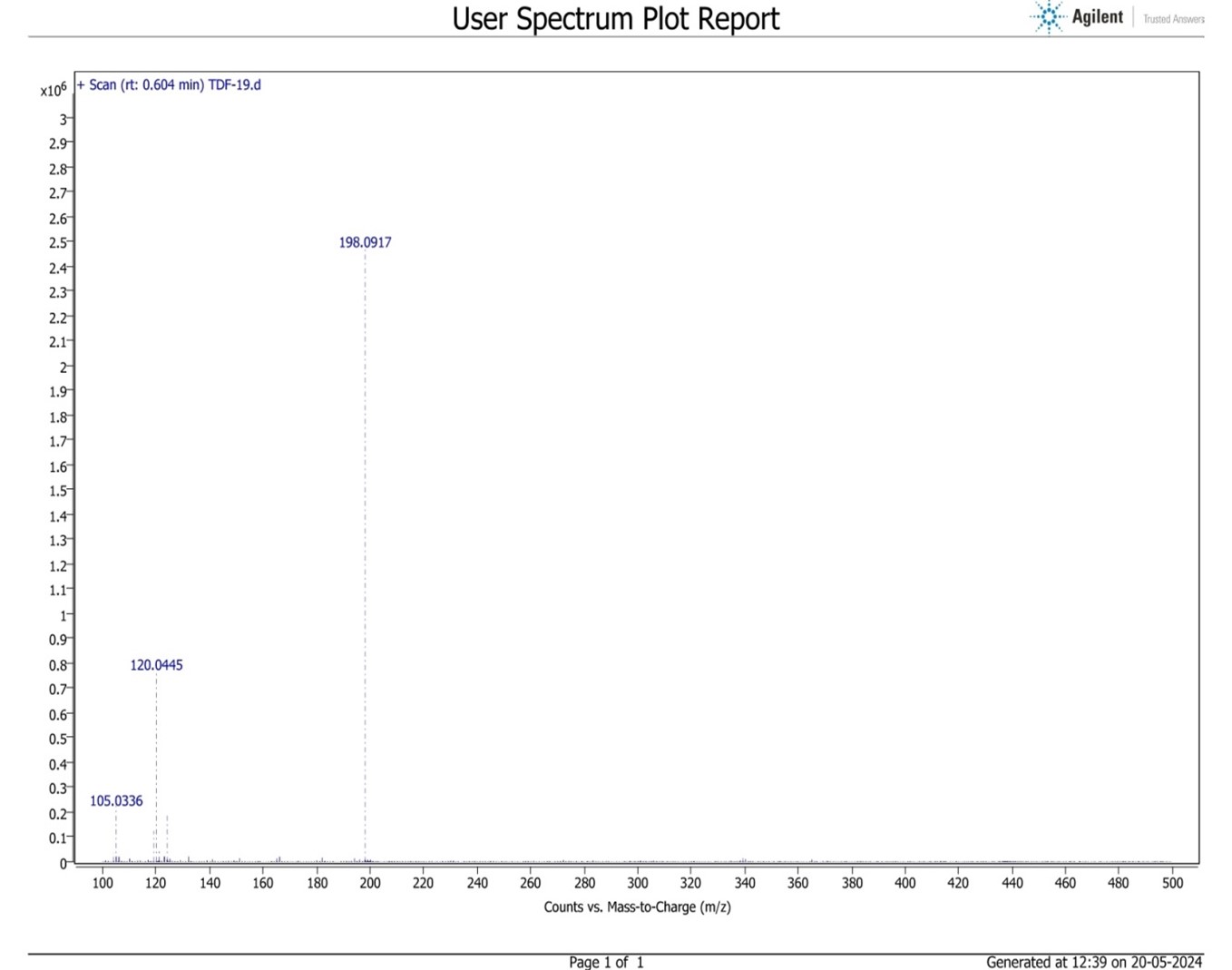
Jatropha curcus (J. curcus) (Euphorbiaceae) is a drought resistant shrub whose leaves, latex, bark, and seed cake employed in traditional medicine to treat cuts, burns, and chronic ulcer. This study reports the isolation and structural characterization of bioactive compound(s) from the methanolic leaf extract of Jatropha curcas. Methanolic extraction of air-dried leaves was followed by silica gel column chromatography with gradient elution (hexane-ethyl acetate-methanol). Fractions were monitored by thin-layer chromatography (TLC), pooled according to similar Rf values, and crystallized to yield isolates. Purified compounds were characterized using FTIR, UV-Vis, 1H/13C NMR and LC-MS. One major yellow crystalline compound (designated TBF-19) was obtained (210.0 mg), and HRMS gave an [M]+ at m/z 198.0917 consistent with C13H11NO; the data supported the proposed structure (2-aminobenzophone as recorded in the primary notes). Wound-healing studies employed excision models in albino rats with three treatment groups (petroleum jelly, povidone iodine, and TBF-19 obtained from Jatropha Curcas). Tissue analyses included hydroxyproline and total protein assays to assess collagen deposition and tissue regeneration. The isolation workflow and spectroscopic evidence indicate that flavonoid- and phenolic-type constituents are major components responsible for the antioxidant and wound-healing properties observed in crude extracts. These findings validate the ethnomedicinal use of J. curcas and provide a basis for further bioassay-guided fractionation and detailed structure elucidation using 2D-NMR and high-resolution MS techniques.
References
Adeyeri, O., Aluko, R., & Okafor, J. (2022). Advances in topical delivery bases for herbal bioactives. Journal of Pharmaceutical Innovation, 17(4), 455–468.
Alam, N., Das, S., & Hossen, S. (2023). Structural identification of bioactive aromatic ketones using spectroscopic techniques. Journal of Molecular Structure, 1298, 135804.
Asekun, O. T., et al. (2022). Phytochemical investigations and wound-healing activity of ethanolic extract of Jatropha curcas. Journal of Biomedical and Medical Sciences, 12(3), 45–52.
Asha, S., Prakash, R., & Idowu, P. (2022). Excision wound models for evaluating herbal-derived nanoparticles. Pharmacognosy Research, 14(3), 210–219.
Bahittah, A., Salim, M., Lubis, T., Helmi, T., Harris, A., & Sari, W. (2023). Efficacy of Jatropha (Jatropha curcas L.) Sap Cream on Total Differential Leucocytes in Inflammatory Phase of Wound Healing on Mice Skin (Mus musculus): A Review. Jurnal Medika Veterinaria.
Bergman, I., & Loxley, R. (1963). Two improved and simplified methods for the spectrophotometric determination of hydroxyproline. Analytical Chemistry, 35(12), 1961–1965.
Caetano, G. F., Fronza, M., Leite, M. N., Gomes, A., and Frade, M. A. C. (2016). Comparison of collagen content in skin wounds evaluated by biochemical assay and by computer-aided histomorphometric analysis. Pharmaceutical Biology, 54(11), 2555–2559. https://doi.org/10.3109/13880209.2016.1170861
Carvalho, M., Araújo-Filho, H., Barreto, A., Quintans-Júnior, L., Quintans, J., & Barreto, R. (2021). Wound healing properties of flavonoids: A systematic review highlighting the mechanisms of action. Phytomedicine: international journal of phytotherapy and phytopharmacology, 90, 153636.
Cedillo-Cortezano, M., et al. (2024). Use of medicinal plants in the process of wound healing. Pharmaceutics, 17(3), 303.
Chen, J., Gao, K., Liu, S., Wang, S., Elango, J., Bao, B., Dong, J., Liu, N., & Wu, W. (2019). Fish Collagen Surgical Compress Repairing Characteristics on Wound Healing Process In Vivo. Marine Drugs, 17. https://doi.org/10.3390/md17010033
Chen, W., Zhang, J., & Huang, Z. (2023). Epidermal regeneration and epithelialization in wound healing: Current insights. Frontiers in Physiology, 14, 1124789.
Criollo-Mendoza, M. S., et al. (2023). Wound-healing properties of natural products: A review. Molecules, 28(2), 598.
Dhanalekshmi, U. M., Poovi, G., Kishore, N. M. D., Raja, M. D., and Reddy, P. N. (2010). Evaluation of wound healing potential and antimicrobial activity of ethanolic extract of Evolvulusalsinoides. Annals of Biological Research, 1(2), 49-61.
Dutta, B., & Kundu, P. (2025). Mass spectrometric fragmentation behavior of aminobenzophenone derivatives. Rapid Communications in Mass Spectrometry, 39(5), e9587.
Goyal, G., Kumar, V., Tyagi, H., Varshney, P., Mishra, S. K., and Chauhan, S. (2024). Herbal Remedies in Wound Healing: A Comprehensive Review of Plants and Non-Clinical Applications. Oriental Journal of Chemistry, 40(2), 569–579. https://doi.org/10.13005/ojc/400232
Ikoyi, T. A., Ashien, U. U., & Bobzom, B. S. (2023). Efficacy of Jatropha curcas leaf extract on some isolates associated with surgical wounds. Journal of Advances in Microbiology, 23(8), 1–10.
Inya, A., & Mesak, I. (2024). Testing The Effectiveness of Burns Healing of Gel Preparations Jatropagar (Jatropha curcas L) Leaf Extract on Male White Rats (Rattus Norvegicus). Strada Journal of Pharmacy. https://doi.org/10.30994/sjp.v6i1.110
Iqbal, S., Khan, A., & Nazir, M. (2024). Spectroscopic elucidation of nitrogen-containing benzophenone analogs from medicinal plants. Natural Product Research, 38(14), 2337–2346.
Kaban, A., Rahmawati, S., & Hidayat, D. (2024). Wound healing efficacy of Jatropha curcas leaf extract gel in animal models. BMC Complementary Medicine and Therapies, 24(1), 118.
Kamaruddin, A., et al. (2024). Phytochemical profile and antimicrobial activity of Jatropha curcas extracts. Journal of Pharmacognosy and Phytochemistry, 13(4), 122–131.
Khalid, R., Sharma, N., & Gupta, A. (2024). FT-IR and NMR analysis of bioactive aromatic ketones derived from natural sources. Spectrochimica Acta Part A: Molecular and Biomolecular Spectroscopy, 312, 123740.
Khalifa, S., Marzouk, M., Metwaly, A., Mohammed, H., & Ahmed, A. (2021). Assessment of Phenolic and Flavonoid Content of Six Jatropha plants Cultivated in Egypt and Evaluation their Anti-inflammatory and Antioxidant Properties. Azhar International Journal of Pharmaceutical and Medical Sciences. https://doi.org/10.21608/aijpms.2021.70777.1060
Koivisto, L., Häkkinen, L., and Larjava, H. (2011). Re‐epithelialization of wounds. Endodontic Topics, 24(1), 59–93. https://doi.org/10.1111/ETP.12007
Li, J., Wang, H., & Zhao, F. (2023). HRMS and NMR-based elucidation of substituted benzophenones from herbal extracts. Phytochemistry Letters, 54, 131–139.
Lipatov V.A., Naimzada M.D.Z., Terekhov A.G., Zaitsev A.I., Litvinenko V.Yu., Mishina E.S., Grigoryan A.Y. 2024. Hydroxyproline as a marker of the effectiveness of skin wound therapy in ischemia. Actual Problems of Medicine, 47(2): 273–288 (in Russ.). https://doi.org/10.52575/2687-0940-2024-47-2-273-288
Manjunatha, K., et al. (2005). Evaluation of wound healing properties of herbal ointments. Indian Journal of Natural Products, 21(4), 12–17.
Mathew-Steiner, S., Roy, S., & Sen, C. (2021). Collagen in Wound Healing. Bioengineering, 8. https://doi.org/10.3390/bioengineering8050063
Mohammed, A., Enemaduku, A., Yahaya, S., Muhammad, A., & Oyeronke, K. (2022). Evaluation of wound healing potential of Jatropha curcas leaf extracts ointment based on wound infection in Wistar rats’ model. Journal of Bioscience and Biotechnology Discovery. https://doi.org/10.31248/jbbd2022.167
Mule, A., Satpute, N., Shinde, T., & Shinde, S. (2024). Jatropha curcas: A Dual-Purpose Plant for Bio Fuel and Medicinal Applications. International Journal of Advanced Research in Science, Communication and Technology. https://doi.org/10.48175/ijarsct-22460
Downloads
Published
Issue
Section
License
Copyright (c) 2025 Journal of Science Research and Reviews

This work is licensed under a Creative Commons Attribution-NonCommercial 4.0 International License.
- Attribution — You must give appropriate credit, provide a link to the license, and indicate if changes were made. You may do so in any reasonable manner, but not in any way that suggests the licensor endorses you or your use.
- NonCommercial — You may not use the material for commercial purposes.
- No additional restrictions — You may not apply legal terms or technological measures that legally restrict others from doing anything the license permits.