
Assessment of Physicochemical Parameters of Underground Water (Well Water) in Ijora - Badia Area of Lagos- State, Southwestern-Nigeria
DOI:
https://doi.org/10.70882/josrar.2026.v3i1.131Keywords:
Physicochemical, Anthropogenic, Groundwater, Environment, SignificantAbstract
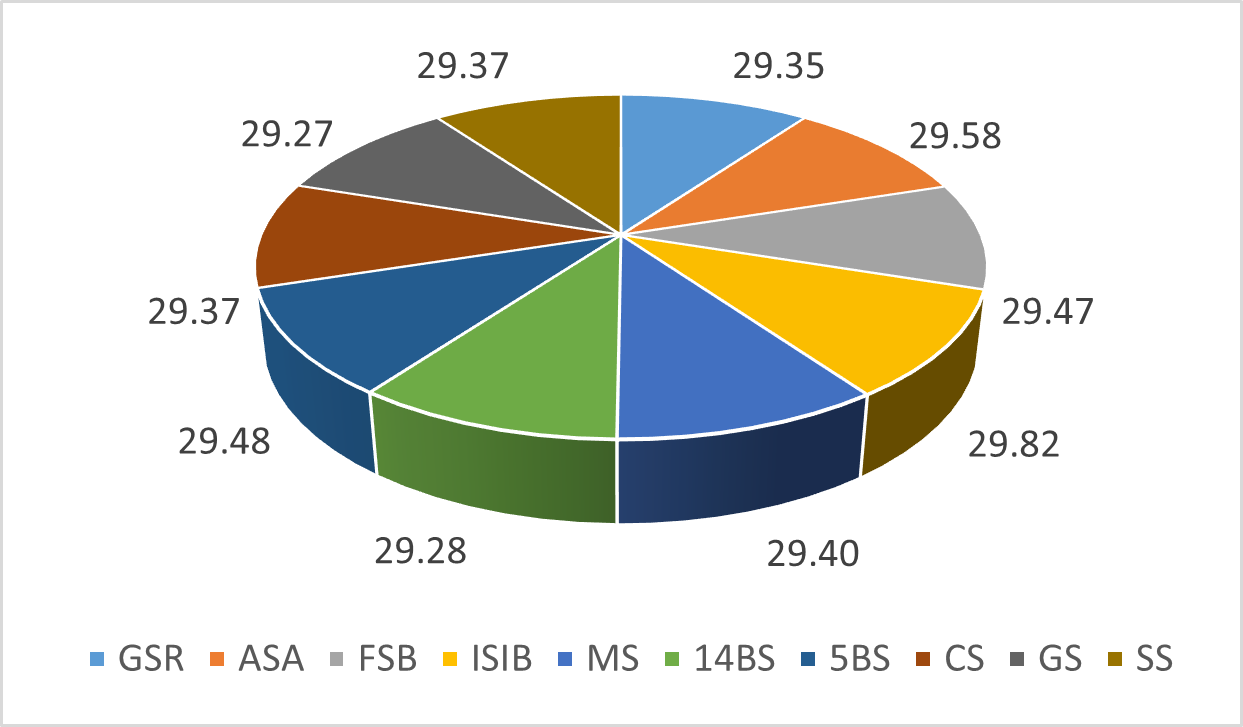
This study presents reports on the Assessment of Physicochemical Parameters of Undergroundwater (wellwater) in Ijora - Badia Area of Lagos- State, Southwestern- Nigeria. Ten wellwater samples were randomly collected from ten locations, four times per month, between August 2024 and January 2025. Samples were obtained with pre-washed, labelled plastic bottles, digested, and analyzed using standard procedures to measure physicochemical parameters such as pH, temperature, electrical conductivity (EC), acidity, alkalinity, turbidity, total suspended solids (TSS), and total dissolved solids (TDS). Results of Physicochemical parameters shows: pH (5.44 -7.05), temperature (29.3 - 29.8°C), EC (1417.5 - 2312.5 μS/cm), acidity (35.0 - 202.7 mg CaCO3/L), alkalinity (103.5 - 384.7 mg CaCO3/L), turbidity (7.8 - 337.5 NTU), TSS (30.5 -51.5 mg/L), and TDS (0.799 - 2.4123 mg/L). Principal Component Analysis identified three factors -PC1, PC2, and PC3 - which accounted for 70.25% of the total variance indicating predominantly anthropogenic sources from industrial, municipal, and domestic waste, dissolved and suspended solids, industrial effluents, and surface runoff, contributing to salinity and mineral-related pollution, thermal pollution, mineral dissolution, chemical weathering and natural geochemical processes. Correlation analyses (p > 0.5) further supports the high pollution levels. Physicochemical parameters varied significantly, except temperature.The physicochemical parameters values exceeded Nigeria Industrial Standards (NIS) and World Health Organization (WHO) limits, indicating that groundwater in the area is significantly polluted and unsuitable for domestic use.
References
Abraham, T., Embialle, M., Self, T., Samuel, F., Here B., Mahmud A., & Ayenew, N. (2021). Determination of Heavy Metal Contamination in Ground and Surface Water Sources in Jimma Town, Southwest Ethiopia. Journal of Environment pollution and Human Health, 9(2): 36 - 43.
Adamu, M., & Yusuf, A. (2025). Assessment of borehole and well water quality in Tafawa Balewa, Bauchi State, Nigeria. Journal of Environmental& Earth Sciences, 7(1), 25 - 38. Available through DOAJ: https://doaj.org/article/c06760acec9249a68217b9ca4370886d
Ajiwe, V. & Eboagu, K. (2021). Groundwater contamination and health risk assessment in urban areas. Journal of Environmental Health, 34(2), 112 - 125.
Aliyu, A. K., Modu, B., & Tan, C. W. (2018). A review of renewable energy development in Africa: A focus in South Africa, Egypt and Nigeria. Renewable and Sustainable Energy Reviews, 81, 2502- 2518. https://doi.org/10.1016/j.rser.2017.06.055.
AOAC. (2000). Official Methods of Analysis, 17th Edition. Association of Official Analytical Chemists.
APHA. (2017). Standard Methods for the Examination of Water and Wastewater, 23rd Edition. American Public Health Association, American Water Works Association, Water Environment Federation.
Arafat, H., Ahmed, S. M., Rahman, M. T., & Karim, M. R. (2021). Graphical analysis method for the determination of turbidity in water samples using UV/Vis spectrophotometry. International Journal of Environmental Science and Technology, 18(4): 1123 - 1132. https://doi.org/10.1007/s13762-021- 03017-4
Awang, S. E., Nurmaya, A., Sofatunida, T. H., & Fauzi., M. A. J. (2025). Analysis of Illegal Gold Mining (PETI) Impact on The Environment with TDS, TSS, Mercury and Cyanide Parameters in Water and Sediment of Cikaniki River. Aceh Int. J. Sci. Technol., 14(1) 74-83. doi: 10.13170/aijst.14.1.43432. Copyright: © 2025 by Aceh International Journal of Science and Technology
Baird, R.B., Eaton, A.D., & Rice, E. W. (2017). Standard Methods for the Examination of Water and Wastewater, 23rd Edition.
Balaguru, M., & Senthil Kumar, G. R. (2013). Groundwater quality impact assessment on lekkur sub basin using hych program: A case study from tamilnadu, India. International Journal of Current Research. 5(12): 3950 - 3956.
Caerio, S., Costa, M. H., Ramos, T. B., Fernandes, F., Silveira, N., Coimbra, A., & Painho, M.(2005). Assessing heavy metal contamination in Sado Estuary sediment: An index analysis approach. Ecological Indicators 5: 155 - 169.
Dangari, L. L., & Istifanus, F. I. (2025). Assessment of toxic metals and physico-chemical parameters of spring, borehole and well water in Hong Local Government Area, Adamawa State, Nigeria. International Journal of Recent Engineering Science, 12(4), 9 - 23. https://doi.org/10.14445/23497157/IJRES-V12I4P102.
Dione, M. M., Diouf, S., Ndiaye, B., Hane, M., Cisse, D., Dione, C. T., Diagne, I., Ba, S., & Ndiaye, M. (2024). Determination of physico-chemical parameters of well water in the central Niayes area of Mboro (Senegal). Science Journal of Chemistry, 12(5), 86 - 93. https://doi.org/10.11648/j.sjc.20241205.11
Dodds, W. K., & Whiles, M. R. (2020). Freshwater Ecology: Concepts and Environmental Applications (3rd ed.). Academic Press (Elsevier). 1,040, ISBN: 978-0-12-813255-5.
Elinge, C. , Hassan, A. M., & Israel, O . (2015). Physico - Chemical and Heavy Metal Analyses of Some Ground Water in Bunza, North Western, Nigeria. American Journal of Applied Chemistry. 3(4): 153 - 157. https://doi.org/10.11648/j.ajac.20150304.12
Emenike, P. C., Tenebe, I., Ogarekpe, N., Omole, D., & Nnaji, C. C. (2019). Probabilistic risk assessment and spatial distribution of potentially toxic elements in groundwater sources in Southwestern Nigeria. Scientific Reports 9:15920 https://doi.org/10.1038/41598-019-52325-z.
García-Ávila, F., Huanga-Huanga, E., Méndez -Valladares, V., Peñaloza-Zhispón, U., Valdiviezo-Gonzales, L., & Sánchez-Cordero, E. (2025). Exploring groundwater quality through key parameters and management tools for its conservation and recovery. Environmental and Sustainability Indicators. 27: 1-21. 10076.
Gebresilasie, K. G., Berhe, G. G., Tesfay, A. H., & Gebre, S. E. (2021). Assessment of Some Physicochemical Parameters and Heavy Metals in Hand-Dug Well Water Samples of Kafta Humera Woreda, Tigray, Ethiopia. International Journal of Analytical Chemistry, 1- 9, Article ID 8867507, https://doi.org/10.1155/2021/8867507.
Hassan, A. A. (2016). Qualitative assessment of pollution Indices for heavy metals of the drinking water in Kirkuk, City, Northern Iraq Journal of Environment and Earth Sciences, 6(9): 2225 - 0948.
Ika, S., & Saiful, I. (2024). Microplastics in Landfill Environments: Distribution, Characteristics, and Risks from Gampong Jawa, Indonesia. Aceh Int. J. Sci. Technol., 13(2): 131-148. https://doi.org/10.13170/aijst.13.2.42344.
Ikeagwuani, C. O., & Mbonu, F. O. (2024). Analysis of physicochemical parameters in well water from Unwana community, Southeastern Nigeria. EKETE - International Journal of Advanced Research, 2(4).
Indri, D., Habib, S., Muhammad, F., Adi, R., & Martha, R. (2023). Simple Technology of Material Physics of Groundwater Conservation in Dealing with Climate Change in Disaster Areas of North Sumatera. Aceh Int. J. Sci. Technol., 12(2): 276 - 284. https://doi.org/10.13170/aijst.12.2.33058.
Kayode-Isola, T. M., Adebisi, O. O., Isola, O. O., Awe, S., Eniola, K. I. T., & Olalekan, A. B. (2025). Assessment of physicochemical characteristics and spatial distribution of heavy metals in hand-dug wells near septic tanks in Ojo LGA, Lagos State, Nigeria. Open Access Research Journal of Science and Technology, 15(2), 009 - 026. https://doi.org/10.53022/oarjst.2025.15.2.0128
Laoufi, A., Guettaia, S., Boudjema, A., Derdour, A., Almalki, A. S., Bojer, A. K., El-Nagdy, K. A., & Ali, E. (2025). Seasonal groundwater quality analysis in a drought-prone agricultural region using GIS and IWQI for nitrate contamination insights. Scientific Reports, 15, 22948. https://doi.org/10.1038/s41598-025-06884-z.
Lebbie, S. E., Lawal, O., & Kanneh, U. (2025). Analysis of physico chemical parameters to evaluate drinking water quality between two districts Kambia and Tonkolili in Sierra Leone. World Journal of Applied Chemistry, 10(1), 1-17. https://doi.org/10.11648/j.wjac.20251001.11
Mohana Priya, E., Uma, E., & Mitra, D. (2025). Preliminary assessment of domestic well water quality and heavy metal contamination near Orathupalayam Dam, India.Case Studies in Water Resources. https://doi.org/10.1016/j.clwat.2025.100177.
Mshelia, S. S., & Mbaya, A. Y. (2025). Suitability of groundwater quality for drinking using water quality index in Kano Metropolis, Nigeria.FUDMA Journal of Sciences. Retrieved from https://fjs.fudutsinma.edu.ng/index.php/fjs/article/view/2217.
Nigerian Industrial Standard (NIS). (2007). Nigerian standard for drinking water quality. N1S - 554 - 2007.
Ogunware, A. E., Adedigba, P. A., Oyende, Y. E., Adekoya, A. A., & Daramola, A. R. (2020). Physicochemical, bacteriological and biochemical assessment of water samples from unprotected wells in Lagos State metropolis. Asian Journal of Biochemistry, Genetics and Molecular Biology, 3(4), 24 - 36. https://doi.org/10.9734/ajbgmb/2020/v3i430092
Okimiji, O. P., Shittu, O., Oguntoke, O., Adedeji, H. O., & Okafor, O. P. (2021). Seasonal variation in physico-chemical properties of drinking water in Lagos Metropolis slums including Ijora-Badia. Ethiopian Journal of Environmental Studies and Management, 14(1), 88-99.
Olusola, J. A., Aturamu, A. O., Asaolu, O., & Ogunleye, O. S.(2024). Spatial distribution and potential ecological and health risks associated with heavy metals in the Ijero - Ekiti mining site, Nigeria. Regional Sustainability, 5(1):100110. https://doi.org/10.1016/j.regsus.2024. 03.004.
Onoyima, C. C., Okpanachi, C. B., & Akoji, J. N. (2025). Hydro-geochemical characterization and groundwater quality assessment of the Mariri aquifer, Kano, Nigeria. Journal of Agriculture and Environment for International Development, 119(1), 469–486. https://doi.org/10.36253/jaeid-17814
Opaluwa, O. D., Mohammed, Y., Suwabat, M., Ogah, A. T., & Ali, D. (2020). Assessment of water quality index and heavy metal contents of underground water sources in Doma Local Government Area, Nasarawa State, Nigeria. Asian Journal of Applied Chemistry Research, 6(3), 27 - 40. https://doi.org/10.9734/ajacr/2020/v6i330163.
Oritsedere, P., Ugbebor, J. N., & Ugwoha, E. (2022). Groundwater quality assessment of Ikorodu Local Government Area of Lagos State, Nigeria. Journal of Engineering Research and Reports,22(4), 44 -54. https://doi.org/10.9734/jerr/2022/v22i417534
Ovonramwen, O. B. (2020). Physicochemical Analysis of Surface and Ground Water in Ugbomro and Iteregbi, Delta State, Nigeria. Journal of Applied Science and. Environmental. Management. 24(3): 511- 517.
Perpetual, E., Jimoh, W., Abdulrahman, A., & Shuibu, Y. (2022). Determination of Physicochemical Parameters of Water Samples in Active War Zones of Borno State, Nigeria. Nigerian Research Journal of Chemical Sciences, 10(1): 1 - 24.
Punde, S. B., & Kulkarni, M. N. (2025). A critical review on physicochemical parameters in water quality management: Key indicators for sustainability and pollution mitigation. International Journal of Creative Research Thoughts. 13(8).
Rahman, M. A., Hasnat, M. A., & Alam, M. T. (2020). Multivariate statistical analysis for assessing groundwater pollution in an urban-industrial area of Bangladesh. Environmental Advances, 2: 100018.
Sawyer, C. N., McCrty, P. L., and Parkin, G. F. (2003). Chemistry for Environmental Engineering and Science (5th ed.). McGraw-Hill.
Scott, T. M., Nystrom, E. A., & Reddy, J. E. (2019). Groundwater quality in the Delaware, Genesee, and St. Lawrence River Basins, New York, 2015. U.S. Geological Survey Open-File Report 2019 - 1005, 42:2 appendices. https://doi.org/10.3133/ofr20191005 U.S. Geological Survey, Reston, VA.
Shagari, Y. S., & Yabo, A. G. (2023). Determination of physicochemical properties of some selected well and borehole water of Nasarawa area of Zagga town of Kebbi State, Nigeria. Kaunia: Integration and Interconnection Islam and Science Journal, 18(2), 59–62. https://doi.org/10.14421/kaunia.3741
Smith, D., Johnson, L., Adewale, F., & Chen, Y. (2021). Heavy metals in drinking water: Risks and mitigation strategies. Public Health and Water Safety, 12(4): 210 - 225.
Tchounwou, P.B., Yedjou, C.G., Patlolla, A.K. & Sutton, D.J. (2012). Heavy metal toxicity and the environment. Experientia Supplementum, 101, 133 - 164. https://doi.org/10.1007/978-3-7643-8340-4-6.
Tongu, S. M., Nyijime, T. A., Nwankwo, R. C., & Odiba, J. O. (2024). Assessment of physicochemical parameters of hand dug well water in Makurdi metropolis, Benue State, Nigeria. Journal of Chemical Society of Nigeria, 49(2). https://doi.org/10.46602/jcsn.v49i2.961
UNICEF & WHO. (2019). Progress on household drinking water, sanitation and hygiene, 2000 - 2017: WHO/UNICEF JMP.138.
Valko, M., Jomova, K., Alomar, S. Y., Nepovimova, E., & Kuca, K. (2024). Heavy metals: toxicity and human health effects. Archives of Toxicology, 99(1): 153 -209. https://doi.org/10.1007/s00204-024-03903-2
World Health Organization. WHO. (2011). Guidelines for Drinking Water Quality, 4th ed., Acceptability aspects: taste odour and appearance, Geneva Switzerland. 1541.
World Health Organization. WHO. (2022). Guidelines for Drinking Water Quality (4th ed. incorporating the 1st and 2nd addenda). WHO. (Global guidance on physical and chemical parameters like pH, turbidity, EC, TDS, hardness, and dissolved oxygen for drinking water safety.)
Yusuf, A. A., Adekunle, S. A., & Ogunfowokan, A. O. (2018). Pollution index assessment of heavy metals in Nigerian groundwater systems. Environmental Science and Pollution Research, 25(12): 12345 - 12358.
Downloads
Published
Issue
Section
License
Copyright (c) 2026 Journal of Science Research and Reviews

This work is licensed under a Creative Commons Attribution-NonCommercial 4.0 International License.
- Attribution — You must give appropriate credit, provide a link to the license, and indicate if changes were made. You may do so in any reasonable manner, but not in any way that suggests the licensor endorses you or your use.
- NonCommercial — You may not use the material for commercial purposes.
- No additional restrictions — You may not apply legal terms or technological measures that legally restrict others from doing anything the license permits.